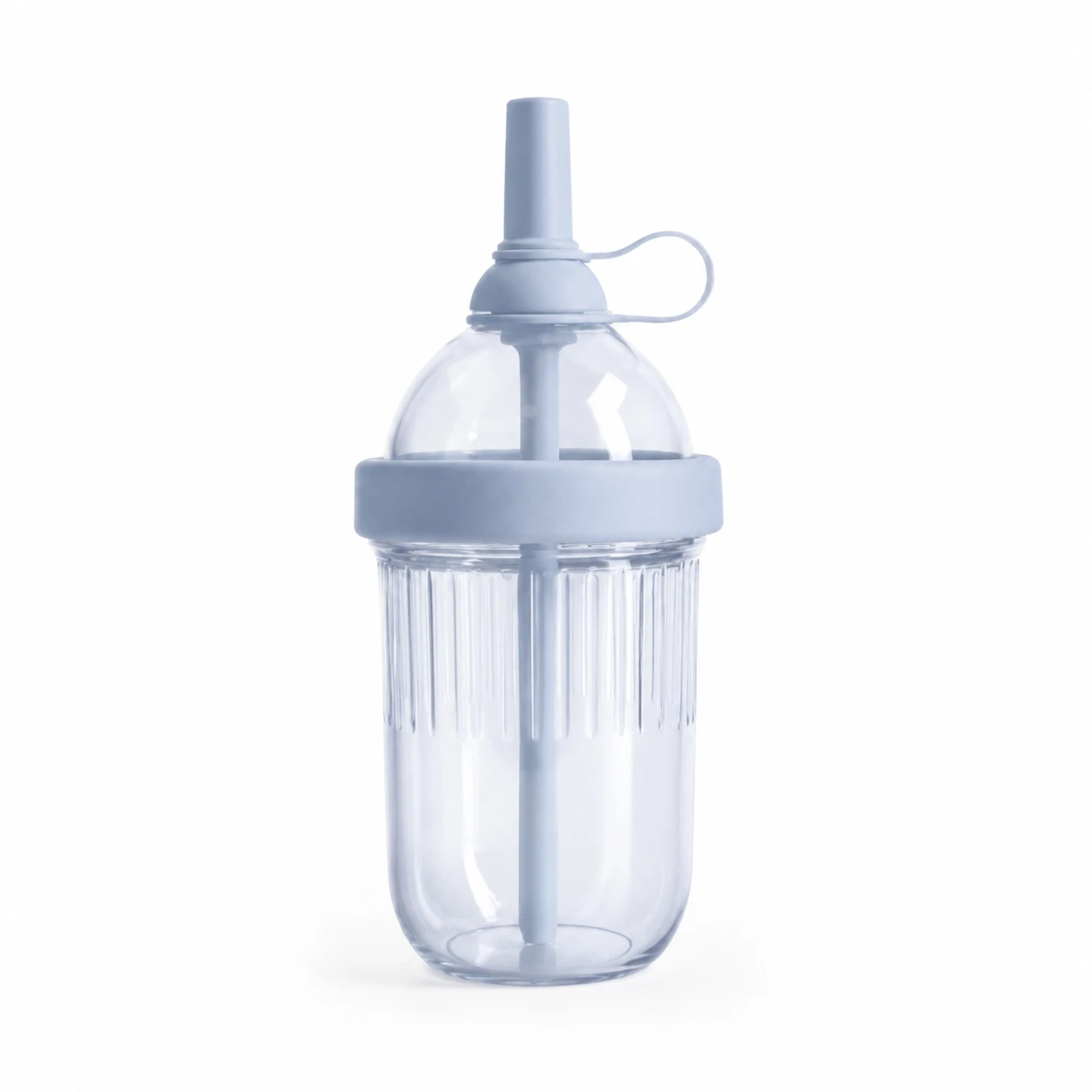
The Growing Demand for Reusable Water Bottles
Reusable water bottles have become an established product category in the global drinkware market. Consumers use them at workplaces, schools, gyms, outdoor activities and during daily travel. For retailers and drinkware brands, this creates demand for bottles that combine practical capacity, suitable materials, convenient cleaning and recognizable product design.
Market research from Grand View Research estimates that the global reusable water bottle market was valued at approximately USD 10.1 billion in 2025. The market is projected to reach USD 10.5 billion in 2026 and USD 14.5 billion by 2033, with an estimated compound annual growth rate of 4.7% from 2026 to 2033. Plastic bottles accounted for more than 35.9% of market revenue in 2025, showing that lightweight reusable plastic drinkware remains an important product segment.
This market growth does not mean that every consumer is replacing disposable bottles with the same type of reusable product. Buyers are choosing from different materials, capacities, lid structures and product functions. Stainless steel bottles are often selected for insulation, while plastic bottles are used when low weight, transparent appearance and flexible design are important.
For Business to Business buyers, the opportunity is not simply to purchase more bottles. It is to identify product specifications that match the intended sales channel, consumer group and price range.
What Is Driving the Sustainable Drinkware Market?
Reducing dependence on single-use bottles
Environmental awareness has encouraged consumers and businesses to consider reusable drinkware as an alternative to repeatedly purchasing single-use beverage containers. Reusable bottles can be used multiple times, although their actual environmental impact depends on material production, product lifespan, washing habits, transport and end-of-life recycling.
This distinction matters for brands. A reusable bottle should not be marketed as automatically having a lower environmental impact under every condition. Product durability, material selection and the number of times it is reused all affect its overall performance.
For manufacturers, this trend creates demand for bottles with replaceable or durable components, secure lids and materials suitable for repeated use.
More hydration products for different lifestyles
Reusable water bottles are no longer limited to basic cylindrical bottles. Product development increasingly considers the way people drink water in different environments.
Examples include:
Sports bottles: Lightweight bodies, flip-top lids, carrying handles and larger capacities.
Office bottles: Transparent bodies, simple shapes and lids that fit into bags.
Outdoor bottles: Carrying straps, protective structures and easy-to-clean openings.
Fruit infuser bottles: Removable baskets that hold sliced fruit, herbs or other infusion ingredients.
Travel bottles: Compact dimensions, secure closures and designs suitable for daily transport.
These product types serve different purchasing requirements. A gym retailer may prioritize capacity and one-handed drinking, while a supermarket buyer may focus on shelf presentation, packaging dimensions and retail pricing.
Growth across online and retail channels
The reusable water bottle market serves several distribution channels, including supermarkets, specialty stores and online retailers. Grand View Research identifies supermarkets and hypermarkets as a major distribution channel, while online sales are also an important part of the market outlook.
Online retail places additional importance on product images, dimensions, material descriptions and functional explanations. Buyers need to understand the bottle structure before purchasing, especially when the product includes multiple components such as a straw, infuser basket, lid and sealing ring.
For brands and wholesalers, clear product specifications can reduce uncertainty during sourcing and help sales teams explain the product to end customers.
Material Selection: Plastic, Stainless Steel and Glass
Material selection affects product weight, appearance, manufacturing process, cost and intended use. There is no single material suitable for every reusable bottle.
|
Material |
Typical Product Characteristics |
Common Purchasing Considerations |
|---|---|---|
|
Tritan |
Transparent appearance, lightweight and suitable for molded bottle bodies |
Grade, food-contact documentation, clarity and impact performance |
|
AS |
Rigid, transparent plastic with a glass-like appearance |
Intended temperature range, impact requirements and product design |
|
PP |
Lightweight and commonly used for lids, baskets and selected bottle structures |
Food-contact suitability, heat exposure and dimensional stability |
|
PETG |
Clear plastic with design flexibility |
Application requirements, processing and chemical compatibility |
|
304 stainless steel |
Metal construction and corrosion resistance under suitable conditions |
Wall structure, thickness, welding, finish and cleaning |
|
Glass |
Transparent and does not retain odors as readily as some plastics |
Breakage protection, weight and packaging |
For plastic bottles, buyers should identify the exact resin grade and intended food-contact application. A material name alone does not demonstrate that a finished bottle complies with the requirements of the destination market.
The complete product may contain several materials. For example, a fruit infuser bottle can include a Tritan body, PP lid, PP infuser basket and silicone sealing ring. Each food-contact component should be assessed according to its own material and use conditions.
Product Design Trends in Reusable Drinkware
Functional components are becoming more important
A reusable bottle is a combination of components rather than just a container. The lid, gasket, drinking opening, straw and carrying structure influence the user experience.
For fruit infuser bottles, the infuser basket is a key functional component. Its length, diameter, perforation layout and attachment method determine how fruit pieces are held inside the bottle and how easily the basket can be removed for cleaning.
A practical design should consider:
Whether the infuser basket can be detached without special tools.
Whether the basket opening is wide enough for the intended fruit pieces.
Whether the perforations allow water to circulate around the ingredients.
Whether the lid and sealing ring can be removed for cleaning.
Whether the assembled bottle fits the intended capacity and packaging dimensions.
These details can also become useful product differentiators for private-label brands.
Leak control and cleaning access
Leakage is one of the most important concerns for consumers who carry bottles in backpacks or handbags. A screw-on lid, correctly fitted silicone gasket and stable thread structure can help reduce leakage risk.
However, a manufacturer should not describe a bottle as leakproof based only on the presence of a sealing ring. The finished product should be evaluated through appropriate leakage tests under defined conditions, including the test orientation, duration and filling level.
Cleaning access is another important design factor. Bottles with narrow openings or complex internal structures may be harder to clean. Removable infuser baskets, detachable straws and accessible sealing rings can make routine cleaning easier.
Color, shape and visual differentiation
Color and shape remain important for retail product development. Transparent bodies can show the beverage inside, while colored lids, printed measurement scales and customized carrying accessories can create a distinct product appearance.
For Business to Business projects, color selection should be considered together with the production process. Buyers should confirm whether the required color is achieved through resin coloring, component coloring, surface printing or another finishing method. These processes can affect minimum order quantities, sample approval and production lead time.
The Role of Customization in Business to Business Bottle Purchasing
As the market expands, retailers and brands often need products that fit their own product positioning rather than standard off-the-shelf designs.
OEM and ODM customization may cover:
|
Customization Area |
Available Project Options |
|---|---|
|
Bottle body |
Material, capacity, shape and dimensions |
|
Lid structure |
Screw-on lid, flip-top lid, straw lid and selected handle designs |
|
Infuser basket |
Material, length, diameter and perforation layout |
|
Color |
Body color, lid color and component color |
|
Logo |
Silk-screen printing and heat-transfer printing |
|
Accessories |
Straws, handles, carrying straps and selected hardware |
|
Packaging |
Color boxes, printed cartons and private-label packaging |
The most effective customization process begins with a product specification rather than a general request for a custom bottle.
A buyer should provide the target capacity, material preference, reference dimensions, lid structure, logo file, packaging requirements and estimated order quantity. This information helps the manufacturer assess tooling, component compatibility and production arrangements before sampling.
What Wholesale Buyers Should Consider
Before placing a bulk order, purchasing teams should evaluate more than the unit price.
Material and compliance: Confirm the material grade for each food-contact component and request supporting documentation relevant to the destination market.
Product dimensions: Check total height, body diameter, usable capacity, lid dimensions and packaging size. A stated nominal capacity may differ from the usable capacity after the lid and infuser are fitted.
Component compatibility: Confirm that the lid, basket, straw and sealing ring fit the bottle body correctly.
Quality checks: Define inspection points for appearance, dimensions, assembly, printing, sealing and packaging.
Sampling: Approve a physical sample before mass production, especially when the project includes a custom mold, color or component structure.
Production planning: Confirm MOQ, sampling time, production lead time, carton quantity and shipping arrangements.
A documented specification makes it easier for the buyer and manufacturer to evaluate the same product requirements.
How MACYS Supports Custom Drinkware Manufacturing
MACYS supports OEM and ODM drinkware projects for brands, wholesalers, retailers and promotional product buyers. The company was established in 2013 and operates 12 production lines, with an overall drinkware production capacity of up to 50,000 units per day.
This production structure supports projects involving different drinkware categories and component configurations. Actual production scheduling depends on the selected model, material, customization requirements and order quantity.
Product and component customization
For reusable water bottles and fruit infuser bottles, MACYS can work with buyers on product capacity, body materials, lid structures, infuser basket configurations, colors, logos and packaging.
For example, a fruit infuser bottle project may require a transparent body, removable fruit basket, screw-on lid and silicone sealing ring. These components need to be assessed as one assembled product rather than specified independently.
OEM and ODM project support
MACYS supports private-label projects that require customized appearance and branding. Depending on the selected product and manufacturing feasibility, customization may include:
Bottle body and component colors.
Logo printing by silk screen or heat transfer.
Lid and accessory configurations.
Packaging artwork and retail box requirements.
Mold development for suitable custom designs.
For buyers with an existing product drawing or sample, the first step is to review the dimensions, materials and component structure. For buyers who only have a product concept, the project can begin with a discussion of capacity, target market, function and expected order volume.
Production and quality-control coordination
MACYS coordinates production requirements across material selection, component manufacturing, assembly, appearance inspection and packaging. Inspection criteria should be defined according to the product specification and buyer's requirements.
For bulk orders, buyers can confirm the required checks before production, such as dimensional inspection, logo position, assembly fit, leakage testing and carton labeling.
This approach helps purchasing teams connect product design decisions with manufacturing and delivery requirements.
Conclusion
The reusable water bottle market is developing through changes in consumer lifestyles, material selection, product design and retail distribution. Sustainable drinkware is not a single product type. It includes plastic bottles, stainless steel bottles, glass bottles, sports bottles, travel bottles and functional products such as fruit infuser bottles.
For Business to Business buyers, product selection should begin with the target consumer and use conditions. Material grade, component structure, usable capacity, cleaning access, sealing performance and packaging all influence the final product.
MACYS supports custom drinkware manufacturing through OEM and ODM services, 12 production lines and an overall capacity of up to 50,000 drinkware units per day. Buyers can discuss product specifications, samples, branding and packaging requirements before arranging bulk production.
Looking for a reusable water bottle manufacturer for your next wholesale or private-label project? Contact MACYS to discuss your product specifications and customization requirements.
FAQ
What materials are commonly used for reusable water bottles?
Common materials include Tritan, AS, PP, PETG, stainless steel and glass. The suitable option depends on the bottle structure, intended use, cost target and food-contact requirements.
Are plastic reusable water bottles suitable for daily use?
They can be suitable when the resin grade and finished product are designed and tested for the intended food-contact conditions. Buyers should check material documentation, temperature limits and care instructions.
What should buyers consider when sourcing fruit infuser bottles?
Buyers should review the bottle material, infuser basket structure, lid design, sealing ring, usable capacity, cleaning access, logo printing and packaging requirements.
Can MACYS customize reusable water bottles for private-label brands?
MACYS supports OEM and ODM customization, including selected bottle materials, capacities, colors, logos, accessories and packaging. The available options depend on the product model and project requirements.
What is the production capacity of MACYS?
MACYS operates 12 production lines and has an overall drinkware production capacity of up to 50,000 units per day. Capacity for a specific bottle model depends on its production process and order schedule.