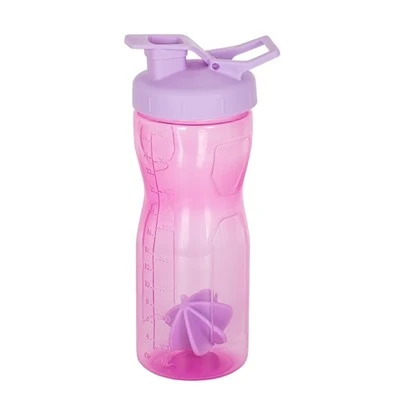
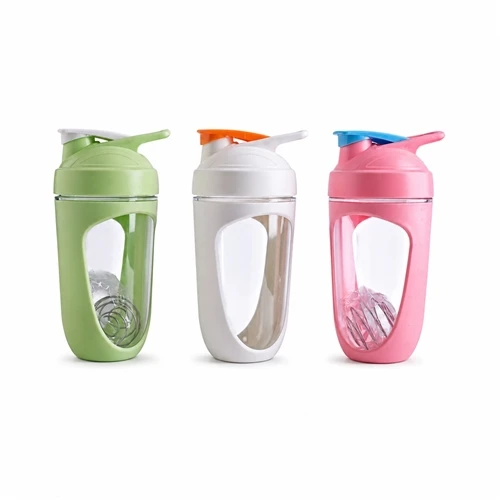
Choosing between a shaker bottle with a blender ball and one with a mixing grid is an important decision for sports nutrition brands, fitness accessory retailers, and private-label buyers. Both designs help disperse protein powder in liquid, but they use different mixing mechanisms and offer different advantages in product structure, cleaning, and everyday use.The agitator design affects the bottle's internal space, component assembly, cleaning requirements, product cost, and potential for customization. Understanding these differences helps buyers select a shaker bottle configuration that matches their target market and price range.At MACYS, we work with buyers on shaker bottle customization, including body colors, logos, and packaging. Understanding how mixing components work is also useful when developing a shaker bottle range for different consumer groups.

What Is a Shaker Bottle with a Blender Ball?
A shaker bottle with a blender ball uses a separate mixing accessory inside the bottle. The ball is commonly made from stainless steel and may feature a looped wire or spring-like structure.
When the user shakes the bottle, the ball moves through the liquid and powder mixture. Its movement creates turbulence and helps break apart powder clumps, allowing the ingredients to disperse more evenly.
Main Features of a Blender Ball Shaker
Movable mixing component: The ball moves freely inside the bottle during shaking.
Stainless steel construction: A stainless steel ball can provide corrosion resistance when the appropriate material grade and surface finish are used.
Simple bottle structure: The bottle body does not necessarily need an integrated mixing grid.
Replaceable accessory: Depending on the product design, the ball can be removed for cleaning or replacement.
This design is often suitable for users who prepare protein shakes, powdered nutritional drinks, and other beverages that require manual mixing.
However, the presence of a blender ball does not guarantee a completely lump-free drink. Results depend on powder characteristics, liquid volume, shaking duration, and the geometry of the ball.
What Is a Shaker Bottle with a Mixing Grid?
A mixing grid is a fixed or removable insert positioned inside the bottle, commonly near the neck or beneath the lid. It usually contains openings, slots, or a mesh-like structure through which the liquid and powder pass during shaking.
As the mixture moves through these openings, the grid helps redirect liquid flow and break up some powder clumps. Unlike a blender ball, the grid does not move freely around the bottle.
Main Features of a Mixing Grid Shaker
Fixed mixing structure: The grid stays in a designated position during use.
No loose metal ball: The design can eliminate the need for a separate steel mixing accessory.
Integrated product design: The grid can be incorporated into the lid or designed as a removable insert.
Different opening configurations: The number, size, and distribution of openings influence liquid flow and cleaning access.
Mixing grids are often used in straightforward manual shaker designs because they can be integrated into the bottle's existing components.
Their performance depends on the grid geometry and its position relative to the liquid flow. Small openings may help disrupt the mixture, but they can also retain residue if the grid is difficult to access during cleaning.
Blender Ball vs. Mixing Grid: Key Differences
Both structures are designed to improve powder dispersion, but their mechanical behavior and maintenance requirements differ.
| Comparison Factor | Blender Ball | Mixing Grid |
|---|---|---|
| Mixing mechanism | Movable ball creates turbulence during shaking | Fixed openings redirect liquid flow |
| Main component | Usually a separate metal accessory | Usually an integrated or removable insert |
| Internal movement | Moves freely inside the bottle | Remains in a fixed position |
| Noise during use | May produce audible rattling | Usually avoids metal-ball rattling |
| Cleaning | Ball and bottle should be washed separately | Openings and contact surfaces require cleaning |
| Replacement | Ball may be replaceable | Depends on whether the grid is removable |
| Design flexibility | Ball size and wire geometry can vary | Grid opening size, shape, and placement can vary |
| Key design concern | Ball movement, corrosion resistance, and fit | Flow resistance, residue retention, and accessibility |
Neither option is automatically better in every application.
A blender ball offers a moving mixing element, while a grid provides a fixed flow-control structure. Buyers should evaluate the complete bottle design rather than selecting a component based only on its name.
Which Design Provides Better Mixing Performance?
Mixing performance is one of the main considerations when comparing these two shaker bottle designs. However, the result depends on several variables beyond the agitator itself.
Protein Powder Type
Different protein powders behave differently when added to liquid.
Whey protein isolate: This powder may disperse relatively easily in a suitable liquid volume. Both a blender ball and a well-designed mixing grid may provide satisfactory results.
Whey protein concentrate: Depending on the formulation and particle characteristics, this powder may require more thorough shaking to reduce visible clumps.
Casein and mass gainer powders: Some formulations are thicker or contain larger quantities of powder per serving. These mixtures may require a suitable liquid-to-powder ratio and longer or more vigorous shaking.
Plant-based protein powders: Some plant protein formulations have a gritty texture or contain particles that are difficult to disperse completely. Agitator design may improve mixing, but it cannot eliminate every texture issue.
For buyers developing a product line, it is useful to test the intended shaker configuration with representative powders rather than relying on a single test mixture.
Liquid Volume and Bottle Geometry
The space available for liquid movement affects how effectively the mixing component works.
A bottle filled close to its maximum capacity may leave insufficient headspace for effective shaking. Conversely, an appropriate air gap allows the liquid to move through the bottle and around the agitator.
The bottle's diameter, shoulder shape, internal surface, and base geometry also influence fluid movement. A blender ball needs enough space to move, while a mixing grid depends on the direction and volume of liquid passing through its openings.
Shaking Method
The user also affects the final result. Adding liquid before powder, following the recommended fill level, securing the lid, and shaking thoroughly can improve consistency.
For product development, compare both structures using the same powder quantity, liquid volume, liquid temperature, and shaking time. Record visible clumps, residue, leakage, and ease of cleaning.
A controlled comparison provides more useful purchasing information than claiming that one design always mixes better.
Cleaning and Daily Maintenance
A shaker bottle needs to be cleaned after use to remove protein residue, odors, and deposits. The agitator design influences how easily users can reach surfaces where residue collects.
Cleaning a Blender Ball Shaker
The blender ball can usually be removed from the bottle before washing. This gives users direct access to the ball and the bottle's interior.
Recommended cleaning practices include:
Rinse the bottle and ball soon after use.
Wash the ball separately with an appropriate cleaning solution.
Check wire intersections and other areas where residue may remain.
Inspect the ball for corrosion, deformation, or surface damage.
Allow all components to dry before reassembly and storage.
For stainless steel accessories, material grade and surface condition matter. Stainless steel should not be treated as completely immune to corrosion under every use and cleaning condition.
Cleaning a Mixing Grid Shaker
A grid may have narrow openings, corners, or contact surfaces that retain powder residue. A removable grid can make these areas easier to access.
When evaluating this design, buyers should check whether the insert can be removed without excessive force and whether all surfaces can be reached with ordinary cleaning tools.
For both designs, dishwasher compatibility should be confirmed for the complete product configuration. It may vary by bottle material, lid construction, seals, and mixing accessories.
From a manufacturing perspective, cleanability should be assessed during product development, not treated as an afterthought once the bottle shape and agitator have been finalized.
How to Choose the Right Shaker Bottle for Your Market
The best configuration depends on the intended users, selling price, product positioning, and maintenance expectations.
Choose a Blender Ball When:
Your customers prefer a movable mixing accessory.
Your product concept uses a separate stainless steel mixing component.
You want to offer a familiar design for protein and sports nutrition drinks.
Your product specification allows for an additional component that users must clean and keep track of.
Before ordering, confirm the ball's material grade, dimensions, surface finish, and movement inside the selected bottle.
Choose a Mixing Grid When:
You prefer a fixed mixing structure rather than a loose metal accessory.
Reduced rattling is an important product consideration.
You want to integrate the mixing component into the lid or bottle assembly.
The grid can be cleaned effectively and fits the intended bottle geometry.
Before production, review the grid's opening dimensions, attachment method, removal requirements, and residue-retention points.
A Practical Procurement Checklist
For importers, distributors, and private-label brands, the following checks help turn the design comparison into a measurable product specification:
Mixing test: Evaluate the intended powder and liquid combinations.
Leakage test: Check the lid, threads, sealing ring, and drinking opening under defined test conditions.
Component inspection: Confirm agitator material, dimensions, fit, and finish.
Cleaning assessment: Check whether residue can be removed from all contact surfaces.
User evaluation: Review noise, handling, drinking comfort, and ease of assembly.
Packaging review: Confirm that the selected components remain protected during transport.
These checks help buyers compare actual samples before approving a bulk order.
Custom Shaker Bottle Manufacturing Considerations
For a private-label shaker bottle, the mixing component is only one part of the product specification. The bottle body, lid, seal, material, decoration, and packaging must work together.
At MACYS, we support B2B shaker bottle customization for brands, wholesalers, retailers, distributors, and promotional product buyers. Depending on the selected model and production requirements, customization can include body color, logo application, and packaging.
When developing a shaker bottle with a blender ball or mixing grid, buyers should define the following details before sample approval:
Bottle body: Specify the material, capacity, dimensions, color, and surface finish. PP and Tritan are two material options commonly considered for plastic shaker bottles, but the appropriate grade should be confirmed for the intended application.
Mixing component: Specify whether the product uses a stainless steel blender ball or a fixed or removable grid. For a grid, document the opening pattern and attachment method. For a ball, confirm its dimensions and material requirements.
Lid and seal: Check thread engagement, sealing-ring placement, drinking-port closure, and ease of opening. The agitator cannot compensate for a poorly designed lid seal.
Branding and packaging: Confirm logo position, printing or decoration method, packaging artwork, and carton requirements. These details affect the final presentation and should be approved before mass production.
MACYS offers OEM/ODM customization, including colors, logos, and packaging. Our stated general MOQ is 1,000 units, subject to confirmation for the selected model and customization requirements.
For buyers comparing two shaker designs, it is practical to request samples with the same bottle capacity and body configuration, changing only the mixing component where possible. This makes it easier to identify how the agitator affects mixing, cleaning, and user experience.
Frequently Asked Questions
Is a blender ball better than a mixing grid?
Not in every situation. A blender ball creates turbulence through its movement, while a mixing grid redirects liquid through fixed openings. The better choice depends on powder type, bottle geometry, cleaning requirements, and user preference.
Does a blender ball prevent all protein powder clumps?
No. It can help disperse powder, but the result also depends on the formulation, liquid ratio, fill level, and shaking method. Some powders may still leave clumps or sediment.
Is a mixing grid easier to clean than a blender ball?
It depends on the design. A removable grid with accessible openings may be easy to wash, while a grid with narrow gaps can retain residue. A blender ball is removable in many designs but requires separate cleaning.
Which design is better for private-label shaker bottles?
Both can be suitable. A blender ball may fit a product concept built around a separate mixing accessory, while a mixing grid may suit a design that avoids a loose metal component. Buyers should compare samples, component specifications, and cleaning performance before deciding.
Can MACYS customize shaker bottles with different mixing components?
MACYS supports shaker bottle OEM/ODM customization, including body colors, logos, and packaging. The availability of specific blender ball or mixing grid configurations should be confirmed against the selected model and project requirements.
Conclusion
The main difference between a shaker bottle with a blender ball and one with a mixing grid is how each component influences liquid movement. A blender ball moves freely to create turbulence, while a mixing grid uses fixed openings to redirect flow.
For B2B buyers, the decision should be based on mixing tests, cleaning access, component durability, bottle geometry, and target-market preferences. Evaluating these factors during sample development helps brands specify a shaker bottle that meets practical use requirements while supporting their intended product positioning.
Develop Your Custom Shaker Bottle with MACYS
If you are sourcing shaker bottles for a sports nutrition brand, retail range, or promotional product program, share your target capacity, preferred mixing structure, material requirements, and branding needs with our team. We can discuss suitable product configurations and customization options for your project.