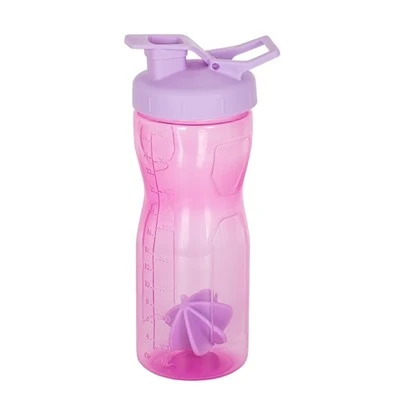
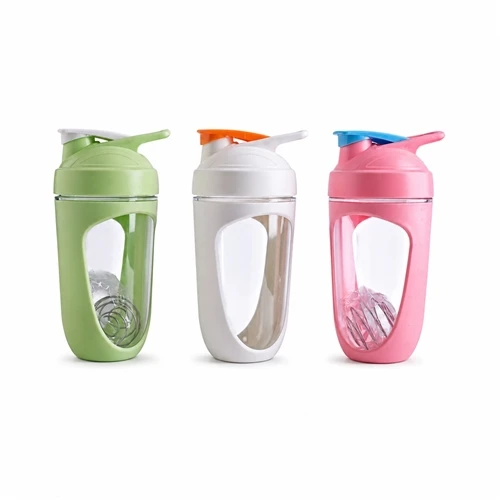
Choosing the right material is an important decision when developing shaker bottles for fitness brands, sports nutrition companies, wholesalers, and private-label businesses. Tritan and polypropylene (PP) are two common plastic materials used in reusable drinkware, but they offer different advantages in transparency, product appearance, cost, and application.
For B2B buyers, the better material depends on the target retail price, intended use, design requirements, and production specifications. PP shaker bottles are often suitable for lightweight, cost-conscious product lines, while Tritan shaker bottles are frequently selected for their clear appearance and combination of transparency and impact resistance.
As a professional shaker bottle manufacturer, MACYS supports custom drinkware production for brands, distributors, wholesalers, and promotional product buyers. Understanding the differences between Tritan and PP helps buyers define product specifications before moving into sample development and bulk production.
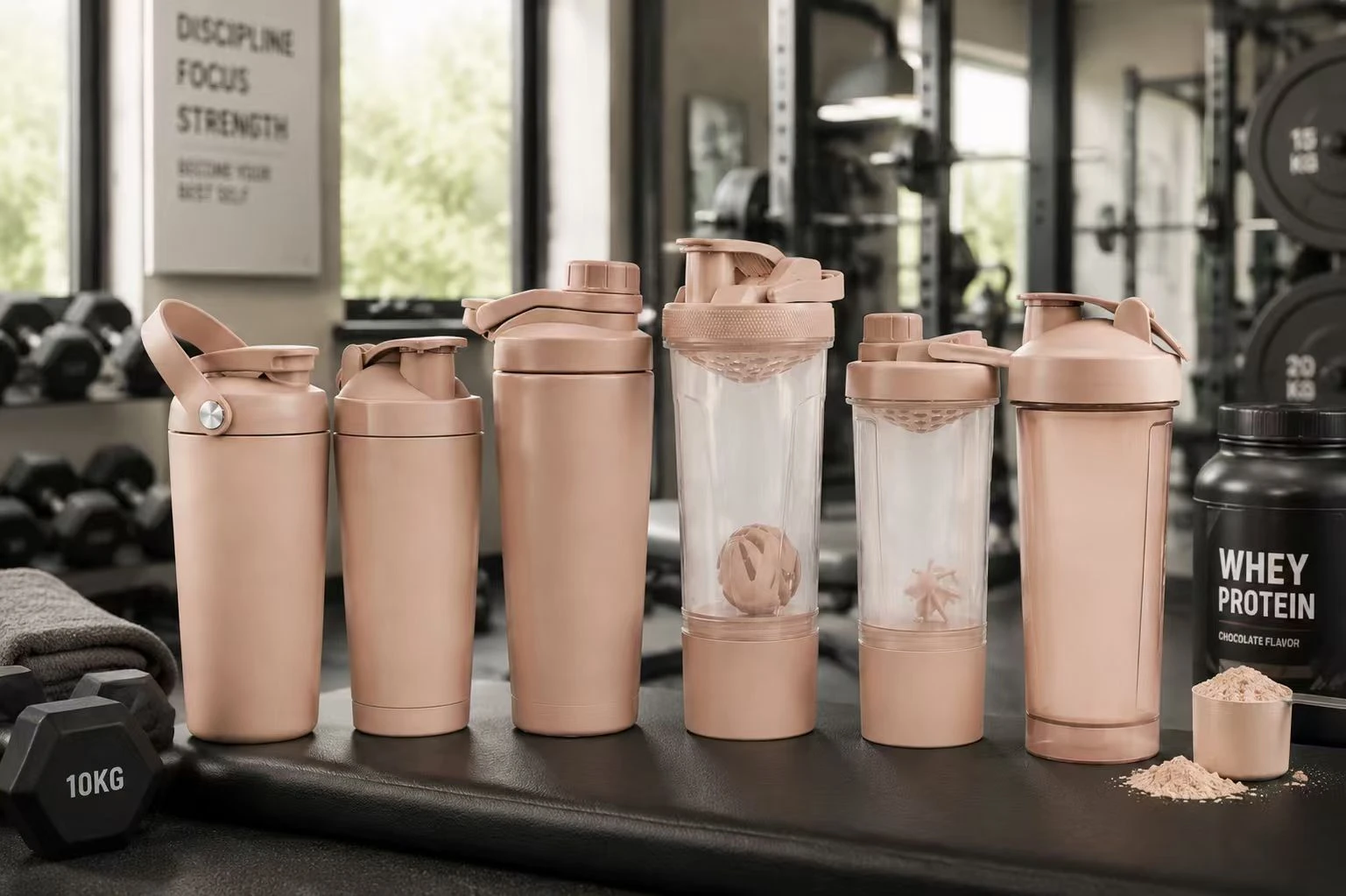
What Are Tritan and PP Shaker Bottles?
Tritan and PP are both plastic materials used to manufacture reusable drinkware. However, their material properties make them suitable for different product designs and purchasing requirements.
What Is a Tritan Shaker Bottle?
Tritan is a copolyester material known for its high transparency and impact resistance. It is often used in reusable bottles where buyers want a clear body, visible measurement markings, and a glass-like appearance without using glass.
For shaker bottles, transparency allows users to see the liquid level and observe the mixing process. This can be useful for fitness brands, sports nutrition retailers, and lifestyle product lines that prioritize appearance and everyday usability.
Tritan is a material family rather than a generic name for all transparent plastics. Buyers should confirm the specific resin grade and applicable food-contact documentation when developing a product.
What Is a PP Shaker Bottle?
Polypropylene, commonly known as PP, is a lightweight thermoplastic used in many reusable consumer products and drinkware components.
PP shaker bottles are often manufactured with a translucent or semi-transparent appearance. Compared with clear copolyester products, they may offer a more cost-conscious option for brands seeking practical shaker bottles for everyday fitness and sports nutrition applications.
PP is also suitable for injection-molded components, depending on the product design. Its processing characteristics can support bottle accessories, lids, and other plastic parts when the selected grade is appropriate.
Tritan vs. PP: Key Differences
The main difference between Tritan and PP shaker bottles lies in their combination of appearance, mechanical properties, and cost.
| Comparison Factor | Tritan Shaker Bottle | PP Shaker Bottle |
|---|---|---|
| Transparency | High transparency | Usually translucent or semi-transparent |
| Weight | Lightweight | Lightweight |
| Impact resistance | Generally good, depending on grade and design | Depends on grade, wall thickness, and construction |
| Surface appearance | Clear, suitable for visible contents and markings | More practical, less glass-like appearance |
| Heat resistance | Depends on resin grade and finished product | Depends on resin grade and finished product |
| Material cost | Generally higher | Generally lower |
| Typical positioning | Appearance-focused and premium-style drinkware | Cost-conscious and everyday drinkware |
| Customization | Color, logo, capacity, and design options depend on construction | Color, logo, capacity, and design options depend on construction |
These comparisons describe general material tendencies rather than guaranteed performance for every product. Wall thickness, molding quality, bottle geometry, lid design, and cleaning conditions can all affect the finished shaker bottle.
For procurement teams, the most useful approach is to compare samples made to the intended product specification rather than choosing a material based on its name alone.
Transparency and Product Appearance
Transparency is one of the most noticeable differences between Tritan and PP.
When Tritan Is a Better Choice
Tritan is worth considering when the product design requires a clear bottle body. Users can see the remaining liquid, read measurement markings, and identify the contents more easily.
This appearance can suit sports nutrition brands, premium fitness accessories, and retail product lines where the bottle itself contributes to the visual presentation.
A clear body can also work with colored beverages and coordinated branding. However, the final appearance depends on the resin grade, wall thickness, molding process, surface finish, and any applied color or decoration.
When PP Is a Better Choice
PP is suitable for brands that do not require a fully transparent bottle. Its translucent appearance can support functional product designs where cost, weight, and everyday use are the main priorities.
Custom colors and printed logos can also be incorporated, subject to the material and decoration process. For bulk promotional orders, this may provide a practical way to align the bottle with corporate colors or campaign branding.
Buyers should evaluate the finished sample under normal lighting conditions to check color consistency, marking visibility, and logo presentation.
Durability and Daily Use
A shaker bottle may be opened, closed, shaken, washed, and transported repeatedly. Its durability therefore depends on more than the raw material.
Tritan is commonly selected for its combination of transparency and impact resistance. It can be suitable for reusable drinkware exposed to regular handling, although impact performance varies with resin grade, wall thickness, bottle shape, and temperature.
PP is also used in reusable drinkware and can be appropriate for daily use. Its performance depends on the specific grade, molding conditions, and the stresses experienced during use.
For both materials, buyers should evaluate:
Impact resistance: Whether the bottle withstands the handling and drop conditions specified for the product.
Surface wear: Whether repeated washing and contact with accessories affect the appearance.
Closure durability: Whether the lid threads, hinge, and locking mechanism continue to function after repeated opening and closing.
Leak resistance: Whether the assembled bottle meets the agreed leakage test requirements.
Odor and residue: Whether the product can be cleaned effectively after contact with protein powder and other beverages.
Neither material guarantees a particular service life. Instead of relying on generalized lifespan estimates, B2B buyers should establish suitable inspection criteria and test the actual product configuration.
Heat Resistance and Cleaning Requirements
Heat resistance is an important consideration when choosing a shaker bottle, particularly for products that may be exposed to warm liquids or dishwasher cleaning.
PP has useful heat-resistant properties for many applications, while Tritan grades are also available for reusable drinkware with defined temperature requirements. However, the maximum operating temperature must be confirmed for the specific resin and finished product.
A resin's melting point is not the same as its recommended use temperature. The lid, sealing ring, printed decoration, and bottle structure may have different temperature limitations.
Before ordering, buyers should confirm:
The manufacturer's recommended temperature range.
Whether the bottle is intended for cold, room-temperature, or warm beverages.
Whether the bottle body and individual lid components are dishwasher-safe.
Which cleaning agents and washing conditions are permitted.
Whether repeated cleaning affects the appearance, fit, or sealing performance.
For protein shaker bottles, timely rinsing and thorough drying are also important. Powder residue can accumulate around the lid threads, drinking spout, and mixing insert, regardless of whether the bottle is made from Tritan or PP.
Food Contact Safety and Material Compliance
Food contact safety should be assessed using the actual material specification and finished-product documentation.
Tritan and PP are both used in food-contact applications, but a material name alone does not establish that every finished bottle complies with every market's requirements.
B2B buyers should confirm the applicable documentation for the intended sales destination, including relevant food-contact regulations and migration testing where required.
BPA-free claims should also be interpreted carefully. A BPA-free statement addresses bisphenol A, but it does not automatically prove that a product meets every chemical safety requirement.
The complete shaker bottle may contain several materials, including the bottle body, lid, mixing component, and silicone or other sealing elements. These components should be assessed according to their intended food-contact use.
For private-label projects, buyers should specify the target market and request documentation corresponding to the actual materials used in production. This makes compliance review more practical than relying on broad marketing claims.
Cost and Custom Manufacturing Considerations
Material cost affects the total purchasing budget, but it is only one part of the finished product price.
PP is generally a cost-conscious choice for standard plastic shaker bottles. Tritan usually carries a higher material cost, which may be justified when a transparent appearance is important to the product's positioning.
The final quotation can also depend on bottle capacity, wall thickness, lid construction, mixing accessories, decoration, packaging, order quantity, and mold requirements.
Customization Factors to Compare
Bottle design: A standard bottle shape may reduce development requirements, while a new shape can involve mold design and tooling costs.
Color selection: Buyers should confirm the available color options, color-matching method, and consistency requirements across production batches.
Logo decoration: Printing method, logo size, placement, number of colors, and durability requirements can affect the production process.
Lid and accessories: Flip-top lids, screw-on lids, mixing grids, and other accessories should be evaluated for fit, function, and cleaning access.
Packaging: Retail boxes, branded labels, inserts, and shipping cartons should be specified before the final quotation.
For a cost-conscious product line, PP may be a practical starting point. For a product where transparent appearance is a major selling feature, Tritan may offer a better fit. The decision should be based on the complete product specification and target retail positioning.
How to Choose the Right Material for Your Market
The right choice depends on the customers you intend to serve and the features they value most.
Choose PP If You Prioritize:
A lightweight, practical shaker bottle.
Cost-conscious product positioning.
Standard bottle designs for bulk orders.
Custom colors and logo decoration without requiring a fully clear body.
Everyday fitness and sports nutrition applications.
Choose Tritan If You Prioritize:
A transparent bottle body.
Clear visibility of liquid levels and measurement markings.
A glass-like appearance without using glass.
A product design that combines transparency with impact resistance.
Retail presentation where the bottle's appearance is an important consideration.
These are general selection guidelines, not absolute rules. The suitability of either material should be confirmed through sample evaluation and the relevant technical documentation.
For B2B buyers, a useful sourcing process is to define the intended application, select the preferred material, confirm the capacity and lid design, review samples, and agree on quality-control requirements before mass production.
Custom Tritan and PP Shaker Bottles from MACYS
Hangzhou MACYS Houseware Co., Ltd. manufactures drinkware for brands, wholesalers, distributors, retailers, and promotional product buyers. Our OEM and ODM services support custom shaker bottle projects based on product requirements, branding specifications, and intended sales channels.
Material and Product Configuration
Buyers can discuss PP or Tritan bottle bodies, subject to the selected product design and material availability. Capacity, bottle shape, lid configuration, and mixing accessories can be evaluated according to the project's functional and commercial requirements.
For example, a sports nutrition brand may request a translucent PP shaker bottle with a screw-on lid and measurement markings. A fitness lifestyle brand may prefer a transparent Tritan bottle with a coordinated color scheme and a customized logo.
Color and Logo Customization
MACYS supports product color customization, Pantone color matching, logo printing, and packaging development, subject to the selected material and production process.
Sample review helps buyers confirm the bottle's appearance, dimensions, branding position, and component fit before approving bulk production.
Mold Development and Bulk Orders
For projects requiring changes to the bottle shape or selected structural components, mold development requirements can be discussed during the design stage. The feasibility, tooling costs, and production schedule depend on the proposed design.
MACYS has a stated starting MOQ of 1,000 pieces for applicable shaker bottle projects. The actual MOQ depends on the selected product, color, printing method, packaging, and other customization requirements.
With 12 production lines and a stated daily production capacity of 50,000 units across its manufacturing operations, MACYS supports drinkware orders across multiple product categories. Capacity allocation and lead times should be confirmed for each project.
From material selection to logo application and retail packaging, our team works with B2B buyers to define product specifications and coordinate the manufacturing process.
Frequently Asked Questions
Is Tritan better than PP for shaker bottles?
Tritan is often preferred when transparency and impact resistance are priorities. PP is generally more cost-conscious and suitable for lightweight everyday drinkware. The better choice depends on the product specification and target market.
Are Tritan shaker bottles more durable than PP shaker bottles?
Tritan offers a combination of transparency and impact resistance, but actual durability depends on the material grade, wall thickness, bottle design, and usage conditions. Both materials should be evaluated through product-specific testing.
Can PP shaker bottles be customized with logos and colors?
Yes. PP shaker bottles can support various color and logo customization options, depending on the selected product and decoration process. Buyers should confirm color consistency and printing durability during sample approval.
Are Tritan and PP shaker bottles dishwasher-safe?
Dishwasher suitability depends on the specific resin grade and the construction of the finished bottle. Buyers should follow the manufacturer's instructions and verify whether the bottle body, lid, and accessories can all withstand the intended washing conditions.
Can MACYS manufacture private-label Tritan and PP shaker bottles?
MACYS supports OEM and ODM drinkware projects, including eligible material selection, color matching, logo printing, and packaging customization. Product availability, MOQ, and production details should be confirmed for the specific design.
Develop Your Custom Shaker Bottle with MACYS
Tritan and PP each offer practical advantages for different shaker bottle applications. Tritan is a strong option when transparency and product presentation matter, while PP is worth considering for lightweight, cost-conscious designs.
For brands and distributors, material selection should be combined with clear product specifications, sample evaluation, food-contact documentation, and defined quality-control requirements.
MACYS supports custom shaker bottle manufacturing for B2B customers seeking coordinated product design, branding, and packaging. Contact our team to discuss your preferred material, bottle capacity, lid structure, color requirements, and order quantity.