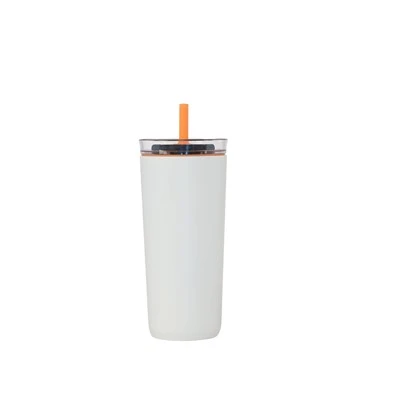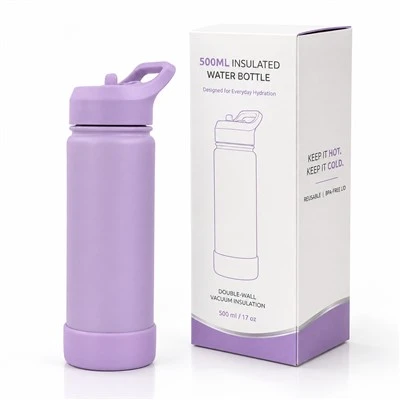
Understanding the Key Factors in Stainless Steel Water Bottle Procurement
Stainless steel water bottles are widely used in retail collections, corporate gifting, fitness products, outdoor activities, and promotional campaigns. For B2B buyers, selecting the right bottle requires more than comparing appearance and unit price. Material composition, insulation structure, lid design, food-contact safety, customization options, and production consistency all influence the final purchasing decision.
A bottle designed for office use may require a compact body and a simple screw lid, while a sports bottle may need a larger capacity, a convenient drinking opening, and a secure closure. Private-label brands also need to consider logo placement, surface finishes, packaging, and repeat-order consistency.
When purchasing in bulk, these details should be confirmed before production begins. Unclear specifications can lead to inconsistent colors, unsuitable lids, unexpected costs, and products that do not match the intended market.
At MACYS, Hangzhou MACYS Houseware Co., Ltd., we provide drinkware products and customization options for brands, wholesalers, retailers, distributors, and promotional buyers. Our product range includes stainless steel water bottles, tumblers, coffee mugs, shaker bottles, jugs, food containers, and fruit infuser bottles.
This guide explains how procurement teams can evaluate product safety, functionality, and customization requirements before placing a bulk stainless steel water bottle order.
Choosing the Right Stainless Steel Material
Material selection affects corrosion resistance, durability, manufacturing cost, and the suitability of a bottle for its intended application.
304 Stainless Steel for Everyday Drinkware
304 stainless steel, commonly associated with the 18/8 designation, is widely used in food-contact applications. Its chromium content helps form a protective passive layer, while nickel contributes to corrosion resistance and material stability.
For everyday water bottles, coffee containers, and insulated tumblers, 304 stainless steel is a common material choice. It offers a practical balance between corrosion resistance, formability, and cost.
However, buyers should confirm which components use the specified grade. A bottle may contain separate inner and outer walls, a metal lid, and other components made from different materials.
For bulk purchasing, the specification should identify the material used in each relevant part rather than simply stating that the product is made from stainless steel.
When Should Buyers Consider 316 Stainless Steel?
316 stainless steel contains molybdenum, which improves resistance to certain corrosive environments, including those involving chlorides. It may be suitable for specialized applications where additional corrosion resistance is justified.
However, a higher material grade does not automatically make a bottle the best commercial choice. Buyers should compare the expected service conditions, product positioning, and additional material cost before selecting 316.
Lower-cost alternatives, including 201 stainless steel, should also be evaluated carefully. Their corrosion resistance differs from that of 304, so they should not be treated as interchangeable without considering the application and required performance.
Bulk purchasing recommendation: Ask suppliers to specify the stainless steel grade for the inner wall, outer wall, and other relevant metal components. Request appropriate material documentation or verification testing where required.
Understanding Food-Contact Safety Requirements
Product safety is an important consideration when sourcing reusable drinkware. A stainless steel body does not, by itself, establish that the entire bottle complies with every applicable food-contact requirement.
The inner surface, lid, gasket, straw, drinking spout, and any coatings may involve different materials and testing considerations.
Check the Interior Surface
Food-contact surfaces should be suitable for the intended beverages and conditions of use. Buyers should confirm whether the inner wall is uncoated stainless steel or uses another lining system.
An uncoated stainless steel interior avoids the additional questions associated with an interior coating, such as coating composition, adhesion, and resistance to repeated use. If a product includes an interior coating, the manufacturer should provide relevant safety and performance documentation.
The presence of an interior coating does not automatically establish that a product is unsafe; its suitability depends on the material, intended use, and supporting evidence.
Evaluate the Complete Lid Assembly
Lid components deserve particular attention because they may include plastics and elastomeric sealing rings. Their suitability depends on their material composition, temperature limits, and intended contact conditions.
For hot-drink applications, buyers should confirm that the lid, gasket, and other beverage-contact components are suitable for the specified temperature range.
A metallic taste or unusual odor should not be dismissed as normal. Potential causes include manufacturing residue, inadequate cleaning, unsuitable materials, or deterioration of components. These symptoms require investigation rather than assumptions about the cause.
Request Applicable Compliance Documentation
Before mass production, identify the regulations and testing requirements relevant to the destination market. Depending on the product and sales region, buyers may need food-contact declarations, migration testing, material reports, or other compliance documents.
A claim such as "BPA-free" addresses a particular chemical concern; it does not independently verify the safety of every component.
Similarly, certifications should be checked against the exact product, model, material configuration, and market requirement. Do not assume that documentation for one bottle automatically covers every customized variation.
For MACYS OEM/ODM projects, buyers should communicate their target market and documentation requirements early so that product specifications and verification needs can be reviewed before production.
Selecting Bottle Sizes and Lid Designs
Capacity and lid design determine how a bottle fits into the user's daily routine. They also affect product dimensions, packaging, shipping, and market positioning.
Match Capacity to the Intended User
Different applications call for different product configurations:
Office and commuting: Compact bottles with practical capacities and easy-to-use closures.
Fitness and sports: Larger bottles with convenient drinking openings and secure lids.
Outdoor activities: Higher-capacity bottles with carrying handles or wide openings for adding ice.
Corporate gifts: Balanced combinations of capacity, appearance, branding, and budget.
Retail collections: Multiple sizes that serve distinct customer needs without creating unnecessary SKU complexity.
The appropriate capacity should be based on the intended use rather than a single universal recommendation.
Buyers should also verify the bottle's base diameter, overall height, and carrying weight. A bottle that does not fit a target vehicle's cup holder or a standard bag pocket may be less suitable for that market.
Choose the Appropriate Lid
Common options include screw lids, flip-top lids, straw lids, and wide-mouth drinking openings.
A screw lid offers a straightforward closure, while a straw lid supports convenient sipping. A wide-mouth design can simplify filling, adding ice, and cleaning. Each option involves different usability and maintenance considerations.
For bulk orders, assess:
Closure consistency and thread fit.
Gasket positioning and replacement requirements.
Leakage performance under an agreed test method.
Ease of disassembly and cleaning.
Compatibility with the intended hot- or cold-drink application.
A lid should be evaluated as part of the complete bottle rather than as an independent accessory. Even a well-made stainless steel body cannot compensate for an unsuitable sealing system.
Comparing Single-Wall and Vacuum-Insulated Construction
Stainless steel bottles generally fall into two construction categories: single-wall and double-wall vacuum-insulated designs.
Single-wall bottles use one metal wall. They are suitable for applications where temperature retention is not a primary requirement. Their simpler structure can also support a lighter or more economical product design.
Double-wall vacuum-insulated bottles contain inner and outer walls separated by a vacuum space. Reducing heat transfer through this space helps maintain beverage temperature for longer.
For B2B procurement, the two constructions should not be compared solely on unit price because they offer different functions and involve different manufacturing requirements.
Define Insulation Performance Before Ordering
If temperature retention is an essential selling point, establish measurable acceptance criteria before approving the product.
The specification should identify:
The required hot- and cold-retention performance.
The starting beverage temperature.
The test duration and ambient conditions.
The measurement method and acceptance limits.
Whether the test includes the production lid.
The lid and neck remain important heat-transfer paths, so the complete assembled bottle should be evaluated.
Buyers should also inspect the bottle for dents, uneven bases, visible joining defects, and other structural issues. Damage to a vacuum-insulated bottle can compromise its performance, depending on the location and severity.
For private-label products, sample testing should confirm that the selected construction meets the intended use before a large production order is authorized.
Customization Options for Private-Label Drinkware
Customization allows brands to develop products that align with their visual identity, sales channels, and customer requirements. However, the most useful custom features are those that create a clear product or commercial benefit.
MACYS supports OEM and ODM drinkware projects, allowing B2B buyers to discuss product selection, branding, colors, and packaging according to the selected model and production requirements.
Logo Application and Surface Finishes
Depending on the product, customization discussions may include printed logos, engraving, exterior color selection, and different finish options.
Common finishes include polished stainless steel, brushed metal, matte surfaces, and colored coatings. Each option produces a different appearance and may involve different production and inspection requirements.
Before approving a custom finish, confirm the reference color, logo dimensions, placement, and acceptable appearance. A physical sample can help establish expectations where the substrate or coating affects the final color.
Lid and Packaging Customization
Brands may also consider coordinating the lid color with the bottle body, selecting a suitable closure, and developing branded packaging.
For corporate gifting, packaging can contribute to the presentation of the complete product. For wholesale distribution, packaging dimensions and protection may be more important for storage, transport, and retail handling.
The final specification should identify which features are customized and which remain standard. This makes quotations easier to compare and helps prevent misunderstandings during production.
Maintain Consistency Across Repeat Orders
A successful custom project requires more than approving one attractive sample. The approved sample, artwork, color references, dimensions, and packaging details should be retained as production references.
For repeat orders, buyers should confirm whether the previous specifications remain unchanged and establish how any requested revisions will be approved.
MACYS works with B2B customers to discuss these product and customization requirements before the order moves into production.
Quality Control Requirements for Bulk Orders
Quality control should be planned before mass production rather than introduced only after finished goods are ready to ship.
A practical inspection plan may cover incoming materials, manufacturing processes, finished products, and packaging.
Material verification: Confirm the specified steel grade and relevant component documentation.
Appearance inspection: Check scratches, dents, coating defects, color consistency, and logo placement.
Dimensional inspection: Verify capacity-related dimensions, height, base diameter, opening size, and other agreed measurements.
Functional testing: Evaluate lid fit, sealing, leakage, and insulation performance where applicable.
Packaging inspection: Check carton quantities, protective materials, labels, and packing specifications.
For large orders, buyers and manufacturers should agree on sampling methods, defect classifications, acceptance criteria, and corrective-action procedures.
If third-party inspection is required, its scope and timing should be established before shipment planning. This helps avoid disputes over which defects are acceptable and which require correction.
How to Evaluate a Stainless Steel Water Bottle Manufacturer
A suitable supplier should be able to address the product specification, customization requirements, quality expectations, and delivery arrangements.
When evaluating a stainless steel water bottle manufacturer, buyers should confirm the available product range, material options, lid configurations, finishing processes, and packaging capabilities.
They should also ask how the supplier manages sample approval, production changes, inspections, and repeat orders.
For customized projects, request a quotation that identifies the actual model, material configuration, finish, logo method, packaging, order quantity, and lead time. This provides a clearer basis for comparing suppliers than a price quoted for a generic bottle.
MACYS was established in 2013 and serves B2B customers across multiple drinkware categories. Its product portfolio includes stainless steel water bottles, tumblers, coffee mugs, shaker bottles, jugs, food containers, and fruit infuser bottles.
For brands and distributors developing customized drinkware, MACYS can discuss product selection and OEM/ODM requirements, including applicable branding and packaging options.
Production lead times, minimum order quantities, testing documents, and available customization methods should be confirmed for the specific project rather than assumed to be identical across all models.
A Practical Checklist for Bulk Purchasing
Before placing an order for custom stainless steel water bottles, procurement teams should confirm the following information:
| Purchasing Item | Details to Confirm |
|---|---|
| Product application | Retail, corporate gifts, fitness, outdoor use, or promotional campaigns |
| Capacity and dimensions | Volume, height, base diameter, and weight |
| Material | Stainless steel grade for each relevant component |
| Interior surface | Uncoated steel or another documented lining system |
| Construction | Single-wall or double-wall vacuum insulation |
| Lid and gasket | Design, materials, temperature suitability, and sealing requirements |
| Surface finish | Polished, brushed, matte, or colored coating |
| Branding | Logo file, application method, dimensions, and placement |
| Packaging | Individual packaging, gift box, carton, and labeling |
| Compliance | Destination-market requirements and relevant test documentation |
| Order details | Quantity, SKU breakdown, minimum order quantity, and lead time |
| Inspection | Sampling method, acceptance criteria, and required performance tests |
After confirming these details, request samples and quotations from suitable manufacturers. Evaluate the samples against the written specification and approve the final design before mass production.
This structured process helps buyers control costs, reduce specification errors, and establish a clearer basis for supplier accountability.
Conclusion: Developing Your Custom Drinkware Project with MACYS
Selecting stainless steel water bottles for bulk purchasing requires a balance between product function, material suitability, food-contact safety, customization, and manufacturing requirements.
Buyers should begin by defining the intended application and choosing an appropriate material grade. They can then determine the bottle capacity, lid design, insulation structure, surface finish, and branding requirements.
Food-contact documentation and product testing should be evaluated according to the complete product configuration and the destination market. For large orders, written specifications, approved samples, and defined inspection criteria provide a practical foundation for consistent production.
MACYS supports B2B drinkware projects through its product range and OEM/ODM customization options. Whether you are developing a private-label collection, sourcing products for wholesale distribution, or preparing customized corporate gifts, a clearly defined specification helps turn your purchasing requirements into a manageable production project.