Understanding Custom Water Bottle Manufacturing
Custom water bottle manufacturing involves adapting a bottle's design, materials, capacity, surface finish, branding, components, and packaging to meet a buyer's product specifications. For brand owners, wholesalers, retailers, distributors, and promotional product companies, customization allows them to develop drinkware that matches their target market rather than relying entirely on standard products.
A custom water bottle project can start with an existing bottle model or a new product concept. Existing models are generally suitable for buyers who want to add a logo, change colors, select different lids, or develop branded packaging. New product development may involve more extensive work on bottle dimensions, structural design, tooling, and component compatibility.
At MACYS, we support B2B customers with custom water bottle solutions covering product selection, material options, appearance customization, logo application, accessories, and packaging. Our production planning connects these requirements with sample confirmation and bulk manufacturing, helping buyers define their specifications before an order enters production.
MACYS: A Custom Water Bottle Manufacturer for B2B Buyers
Hangzhou MACYS Houseware Co., Ltd. was established in 2013 and provides drinkware manufacturing and customization services for international B2B customers. Our product range includes water bottles, tumblers, coffee mugs, shaker bottles, jugs, food containers, and fruit infuser bottles.
MACYS operates 12 production lines with a reported daily production capacity of 50,000 units across its manufacturing operations. This production setup supports bulk orders involving different drinkware categories, product specifications, colors, and branding requirements.
Our OEM and ODM services address different stages of product development. OEM projects follow customer-provided designs, specifications, or approved samples. ODM projects can begin with an existing model or a product concept that requires further development and customization.
For customers building a private-label drinkware range, we can coordinate product selection, custom colors, logo applications, and packaging requirements. For distributors and wholesalers, production planning can focus on order quantities, product combinations, and specification consistency across repeat orders.
Material Selection for Different Water Bottle Applications
Material selection affects a water bottle's weight, appearance, durability, manufacturing process, and intended use. Buyers should evaluate the material together with the product structure, beverage requirements, target retail price, and market regulations.
MACYS works with several drinkware materials, including stainless steel, PP, AS, and Tritan, depending on the selected product.
Stainless steel: Stainless steel is commonly used for reusable water bottles, tumblers, and insulated drinkware. Depending on the design, buyers can select appropriate stainless steel grades and surface treatments. Double-wall vacuum construction is an option for products designed to retain beverage temperature.
PP (polypropylene): PP is used in selected reusable bottles, lids, and drinkware components. Its suitability depends on the component design, intended temperature range, and applicable food-contact requirements.
AS: AS plastic can be used for selected transparent or translucent drinkware designs. It allows product developers to create different visual effects, although its properties must be evaluated against the intended application.
Tritan: Tritan is used in selected reusable bottles where transparency and lightweight construction are important. The specific resin grade and finished product must meet the applicable requirements for the intended use.
When developing a custom water bottle, buyers should confirm the material for each component rather than assuming that the entire product uses one material. Food-contact compliance, temperature limits, cleaning instructions, and relevant test documentation should also be verified for the selected configuration.
Bottle Design and Functional Customization
A bottle's design influences how customers carry, open, fill, clean, and use the product. Customization therefore involves more than changing its external appearance.
MACYS supports customization based on selected bottle models and project requirements. Buyers can discuss capacity, dimensions, bottle shape, lid configuration, and compatible accessories to develop a product for daily hydration, sports, commuting, corporate gifting, or retail distribution.
Capacity is an important starting point because it affects product dimensions, weight, packaging, and portability. A compact bottle may suit travel or promotional projects, while a larger bottle may be preferred for sports, outdoor activities, or extended daily use.
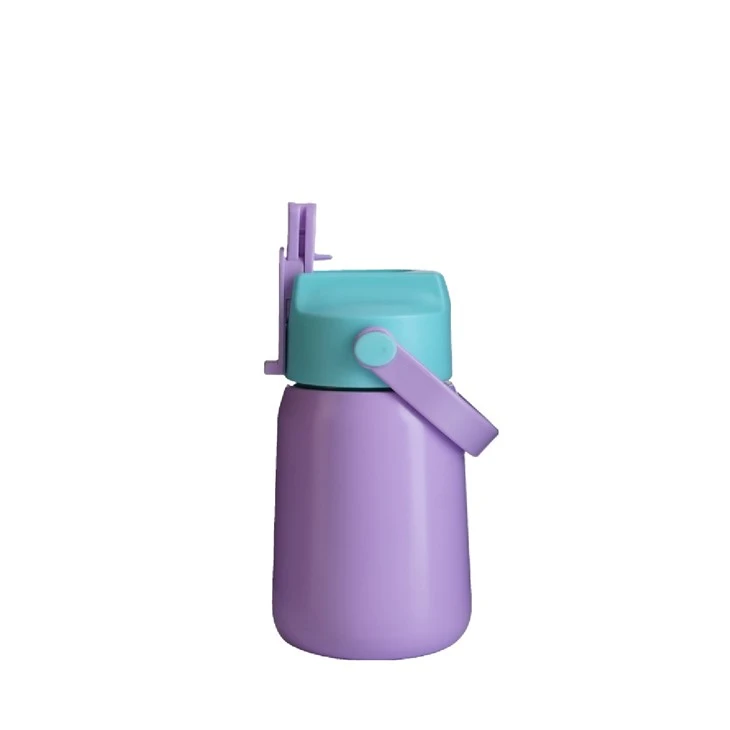
The opening and lid structure also affect usability. Wide-mouth designs can make filling and cleaning easier, while straw lids and flip-top lids provide different drinking experiences. Handle designs and carrying components may be appropriate for selected outdoor or sports bottles.
For projects requiring a new structure, buyers should provide reference images, drawings, target dimensions, or physical samples when available. The final design should be assessed for manufacturability, component fit, cleaning access, and the intended use before production specifications are approved.
Custom Colors and Surface Finishes
Color and surface treatment help brands establish a consistent product appearance across different models and collections. A custom water bottle may use a brand-specific color, a particular texture, or a combination of finishes to distinguish it from standard market products.
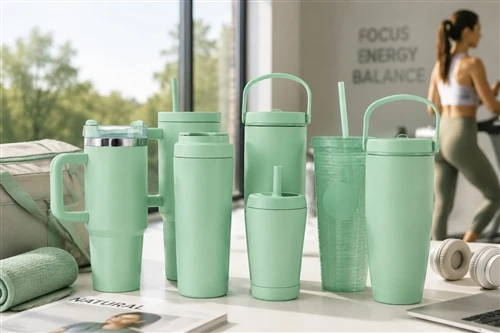
MACYS supports color and appearance customization according to the selected bottle material and manufacturing process. Options may include Pantone color matching, matte or glossy finishes, and other compatible surface treatments.
Pantone references help buyers communicate their intended colors more precisely. However, a printed reference and a finished bottle may look different because of the underlying material, coating, lighting conditions, and production process. Reviewing an actual sample is therefore recommended before approving a large order.
Surface finish selection should also consider daily handling and cleaning. The finish must be compatible with the substrate and intended application. For projects involving multiple colors, buyers should specify the quantity required for each color and clarify whether all colors use the same bottle model and finish.
By confirming these details during the sampling stage, buyers can establish a clear appearance standard for subsequent bulk production.
Logo Printing and Private Label Branding
Custom branding is a central part of private-label water bottle manufacturing. The appropriate logo application method depends on the bottle material, surface curvature, artwork complexity, desired appearance, order quantity, and budget.
MACYS can coordinate suitable branding options according to the selected product and project specifications.
Laser engraving creates a permanent mark by removing or modifying the surface layer of compatible materials. It is commonly considered for stainless steel bottles and designs that require a clean, understated logo.
Screen printing is suitable for many solid-color logos and graphic designs. Its feasibility depends on the printing area, bottle shape, ink system, and production requirements.
UV printing can accommodate detailed and multicolor artwork on compatible surfaces. Buyers should confirm adhesion and durability requirements for the selected material and finish.
Heat transfer printing can be considered for suitable graphics and product surfaces, depending on the transfer process and substrate.
Before production, buyers should provide vector artwork where available and specify logo dimensions, placement, colors, and orientation. A physical sample or approved production proof helps confirm the final appearance.
For large orders, the approved logo position and artwork should remain part of the production specification. This reduces ambiguity when the same design is manufactured in several colors or reordered later.
Lid, Straw and Accessory Customization
Lids and accessories influence the function, appearance, and component compatibility of a custom water bottle. The correct configuration depends on how the product will be used and the expectations of its target customers.
Available options for selected models may include screw caps, flip-top lids, straw lids, sliding lids, handles, carrying straps, and silicone components. Not every accessory fits every bottle, so compatibility should be confirmed during product selection.
For sports and outdoor products, buyers may prioritize convenient drinking access and carrying options. For office and commuting drinkware, a compact lid and a design that fits common storage spaces may be more relevant. Promotional products may place greater emphasis on logo visibility and overall appearance.
The complete assembly should be evaluated rather than considering each component separately. Thread compatibility, sealing components, opening and closing operation, and cleaning access can affect the finished product's usability.
When requesting a quotation, buyers should identify the preferred lid type and accessories alongside the bottle model. This helps the manufacturer assess the complete configuration instead of pricing the bottle body alone.
Custom Packaging for Retail and Promotional Products
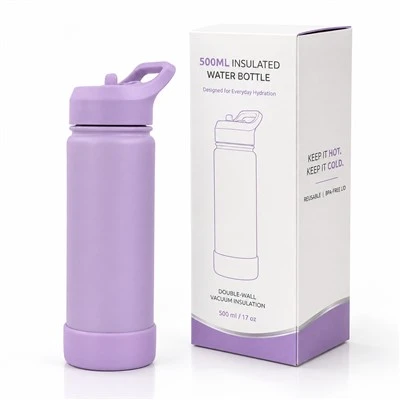
Packaging is another important part of a custom water bottle project. It protects the product during handling and transport while providing space for branding, product information, and retail presentation.
MACYS can discuss packaging customization according to the intended sales channel and product requirements. Options may include standard boxes, custom color boxes, gift packaging, branded inserts, product cards, and other compatible packaging components.
Retail brands may require packaging that reflects their visual identity and displays essential product information. E-commerce sellers may need packaging dimensions and protective materials suitable for their fulfillment process. Corporate gifting projects may prioritize presentation and coordinated branding across the bottle and box.
Packaging specifications should be confirmed before mass production. Buyers should provide artwork, dimensions, labeling requirements, and any relevant destination-market information. Packaging samples or proofs can then be reviewed alongside the bottle design.
Coordinating bottle and packaging customization in the same project also helps buyers assess the complete product presentation before approving the order.
From Sample Approval to Bulk Production
A structured production workflow helps B2B buyers communicate requirements and review the product before committing to a large order.
Step 1: Requirement confirmation. Buyers provide the product category, reference model, target quantity, material preferences, capacity, logo requirements, color choices, and packaging expectations.
Step 2: Product and process evaluation. MACYS reviews the requested specifications against the selected model and available customization options. Any requirements involving new tooling, special components, or non-standard finishes should be clarified at this stage.
Step 3: Quotation and specification confirmation. The quotation should identify the product configuration, unit price, minimum order quantity, customization charges where applicable, packaging, and estimated production schedule.
Step 4: Sample development and approval. A sample or production proof allows the buyer to evaluate the product's appearance, component fit, branding, and functionality. Any necessary revisions should be resolved before mass production.
Step 5: Bulk production. After the specifications and sample are approved, the order can be scheduled according to quantity, material availability, process requirements, and the agreed delivery plan.
Step 6: Final inspection and shipment preparation. The finished products and packaging should be checked against the agreed specifications before shipment arrangements are completed.
The exact lead time depends on the order quantity, product model, customization complexity, and packaging requirements. Buyers should confirm the production schedule with MACYS for each project rather than relying on a single lead time for all products.
Quality Inspection and Production Consistency
For bulk water bottle orders, quality requirements should be defined before production begins. A clear inspection plan helps buyers and manufacturers evaluate whether the finished products match the approved specifications.
Depending on the product, relevant checks may include material and component verification, dimensions, surface appearance, logo position, assembly, lid operation, sealing performance, and packaging condition.
For insulated stainless steel bottles, additional checks may be necessary for vacuum insulation performance and leakage. For plastic bottles, the selected material, molding quality, component fit, and applicable food-contact requirements should be considered.
The inspection method should reflect the actual product structure and risks. For example, a bottle with a straw lid has different component interfaces from a simple screw-cap bottle. A custom printed surface also requires different appearance checks from an unprinted product.
At MACYS, project specifications should be confirmed before bulk production so that product requirements, customization details, and inspection expectations are clearly communicated. Buyers requiring specific testing reports or compliance documents should identify them during the quotation stage.
How to Prepare a Custom Water Bottle Order
Providing complete project information helps reduce repeated clarification and supports a more accurate quotation.
Before contacting a custom water bottle manufacturer, prepare the following information:
Product type: Stainless steel bottle, plastic bottle, tumbler, shaker bottle, or another drinkware category.
Material and capacity: Preferred material, volume, and dimensions where applicable.
Customization requirements: Color references, surface finish, logo artwork, printing method, and placement.
Components: Preferred lid, straw, handle, or other accessories.
Packaging: Standard packaging or a customized retail or gift box.
Order quantity: Total quantity and the required quantities for each model or color.
Target market: Intended application and any relevant regulatory or documentation requirements.
Schedule: Sample approval target and expected delivery date.
If a complete specification is not yet available, reference images, product links, sketches, and estimated order quantities can provide a useful starting point. The manufacturer can then clarify which details are fixed and which options require further evaluation.
Why Work with MACYS for Custom Water Bottle Production
Developing custom drinkware requires coordination between product selection, materials, appearance, components, packaging, and production scheduling. Buyers need a manufacturing partner that can translate these requirements into clear product specifications and coordinate the steps leading to bulk production.
Established in 2013, MACYS supports a broad drinkware range, including water bottles, tumblers, coffee mugs, shaker bottles, jugs, food containers, and fruit infuser bottles. Our 12 production lines and reported daily production capacity of 50,000 units support manufacturing projects across these product categories.
Our customization services help B2B customers coordinate product models, selected materials, logo applications, colors, accessories, and packaging. OEM projects can follow customer specifications, while ODM projects can begin with an existing model or a concept that requires further development.
For brands, wholesalers, retailers, distributors, and promotional product buyers, the next step is to define the intended product, customization scope, and order quantity. With these details established, MACYS can evaluate the project requirements and discuss a suitable quotation, sample plan, and bulk production arrangement.
Planning a custom water bottle project? Contact MACYS with your preferred bottle model, logo artwork, target quantity, and packaging requirements to discuss your OEM or ODM production needs.