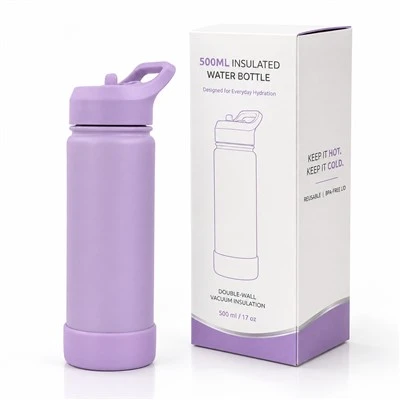
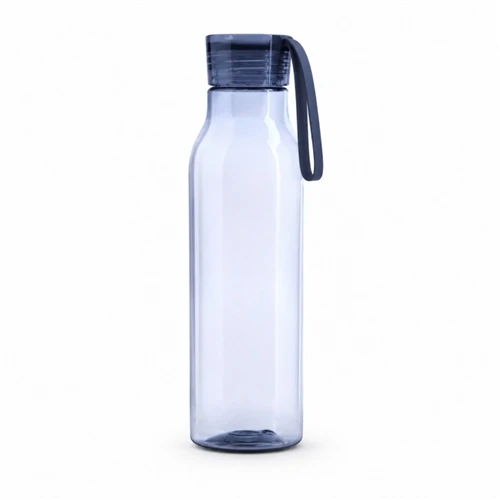
Bottle Type, Capacity and Structural Design
The first decision in a private label project is selecting the appropriate bottle type and defining its basic structure. Different applications require different body shapes, dimensions and drinking configurations.
Common product categories include:
Sports Water Bottles: Designed for gym activities, cycling and outdoor hydration.
Straw Water Bottles: Feature integrated straw systems for convenient drinking.
Wide-Mouth Bottles: Provide larger openings for filling, adding ice and cleaning.
Large-Capacity Water Jugs: Designed for fitness users and extended hydration needs.
Stainless Steel Tumblers: Suitable for retail, commuting and everyday beverage consumption.
Capacity should be considered together with bottle height, diameter, weight and portability. A large-capacity bottle may require a wider body or stronger carrying structure, while a compact bottle needs to balance internal volume with handling convenience.
For OEM projects, buyers can provide technical drawings or reference samples showing the required dimensions. For ODM projects, existing product models can be evaluated and adjusted according to the intended application.
MACYS supports multiple drinkware categories, allowing buyers to develop individual products or coordinate several bottle styles into one branded collection.
Material Selection and Product Performance
Material selection affects product weight, transparency, durability, processing methods and compatibility with decoration techniques. Buyers should evaluate materials according to the intended application rather than choosing them based on appearance alone.
Common drinkware materials include:
|
Material |
Main Properties |
Typical Applications |
|---|---|---|
|
Tritan |
Lightweight, transparent and suitable for reusable plastic bottles |
Sports and everyday water bottles |
|
PP |
Lightweight and suitable for molded components |
Bottle bodies, lids and accessories |
|
AS |
Rigid and transparent appearance |
Selected plastic drinkware |
|
304 Stainless Steel |
Corrosion resistance and mechanical durability |
Tumblers and stainless steel bottles |
Material specifications should go beyond general material names. Buyers should confirm the exact resin grade or stainless steel specification, component application and applicable food-contact requirements.
For plastic bottles, resin selection can influence transparency, heat tolerance, chemical resistance and printing adhesion. Different plastic materials may require different surface preparation or decoration processes.
For stainless steel products, body construction, wall thickness and surface treatment should be confirmed according to the product design and intended performance.
MACYS works with stainless steel and plastic drinkware materials, including 304 stainless steel, Tritan, PP and AS, providing material options for different OEM/ODM product requirements.
Lid Design and Drinking Mechanisms
The lid is one of the most important functional components of a water bottle. Its structure determines how users open the bottle, access the beverage and carry the product.
Common lid configurations include screw-on lids, flip-top lids, straw lids and other drinking mechanisms.
When customizing a lid, buyers should evaluate:
Opening and closing mechanisms
Drinking opening dimensions
Straw length and diameter
Lid attachment structure
Gasket positioning and sealing design
Ease of cleaning and component replacement
The relationship between the lid and bottle neck is particularly important. Dimensions and fitting tolerances must be compatible to ensure consistent assembly.
For example, a gym water bottle with a flip-top lid may require one-handed operation, while a large-capacity jug may need a wider opening and integrated handle.
The sealing structure should also be tested under defined conditions. Buyers should specify the expected handling position, test duration and other relevant requirements rather than assuming every lid design provides the same leak resistance.
For MACYS OEM/ODM projects, lid styles and accessory configurations can be discussed according to the selected product model and manufacturing feasibility.
Logo Printing and Branding Methods
A company logo is one of the most recognizable elements of a private label product. However, the printing method needs to match the bottle material, surface geometry, artwork complexity and expected product usage.
Several decoration methods are commonly considered for drinkware manufacturing.
Silk Screen Printing
Silk screen printing transfers ink through a mesh screen onto the product surface. It is suitable for relatively simple logos, solid-color graphics and text. It works particularly well when the printing area is accessible and relatively flat or gently curved.
Its limitations include complex gradients, very fine artwork and surfaces with deep recesses or heavy textures.
Heat Transfer Printing
Heat transfer uses printed artwork transferred onto the product through heat and pressure. It can support multi-color graphics, decorative patterns and selected wrap-around designs.
The suitability of this process depends on the bottle material, surface treatment and geometry. A decorated sample should be evaluated for color consistency, edge definition and adhesion.
UV Printing
UV printing uses ultraviolet light to cure specially formulated inks during the printing process. It can support detailed graphics, multiple colors and variable information.
However, ink adhesion depends on the substrate and surface preparation. Not every plastic or coating is automatically compatible with every UV ink system.
|
Printing Method |
Suitable Applications |
Important Considerations |
|---|---|---|
|
Silk Screen |
Simple logos and solid graphics |
Color quantity and printing area |
|
Heat Transfer |
Multi-color artwork and patterns |
Material compatibility and adhesion |
|
UV Printing |
Detailed graphics and complex designs |
Ink compatibility and surface treatment |
|
Laser Engraving |
Selected stainless steel surfaces |
Material and finish compatibility |
MACYS provides logo customization options including silk screen printing and heat transfer printing, with the appropriate method determined by the selected product and artwork.
Artwork Preparation and Logo Placement
Even when a suitable printing method has been selected, poorly prepared artwork can affect the final appearance of the bottle.
Buyers should provide production-ready logo files whenever possible. Vector formats such as AI, EPS or PDF are useful because they preserve graphic outlines when resized. Fonts should be converted to outlines or supplied according to the manufacturer's requirements.
Artwork specifications should include:
Logo width and height
Printing position relative to the bottle base or shoulder
Orientation in relation to the lid or handle
Number of printing colors
Required clear space around the logo
Wrap-around printing dimensions, if applicable
Bottle curvature and recessed areas can limit the usable printing surface. Therefore, the manufacturer should confirm the available printing area before finalizing the artwork.
Small text and thin lines also require attention. Details that look clear on a computer screen may become difficult to read when printed at a smaller physical size.
For multi-color logos, registration between different printing colors should be checked during sampling.
MACYS can coordinate logo dimensions, artwork positioning and suitable printing methods as part of its private label customization process. Buyers should approve a physical decorated sample before authorizing mass production.
Bottle Color and Pantone Matching
Bottle body color and logo color should be treated as two separate manufacturing specifications. Both contribute to brand recognition, but they may require different production processes.
Buyers can choose standard colors, custom solid colors, transparent appearances or gradient effects depending on the product material and available manufacturing methods.
To communicate a specific brand color, buyers can provide:
Pantone color references
RAL color references where applicable
Physical color samples
Approved reference product photographs as supplementary guidance
A physical sample is particularly useful when color accuracy is important.
The same color reference can appear different depending on whether the surface is glossy, matte, translucent or frosted. Lighting conditions also affect visual evaluation.
For multi-component bottles, the body, lid, straw, handle and other accessories should each have separate color specifications.
For example, a gradient Tritan bottle may need a transparent body with a colored lid and matching straw. A stainless steel tumbler may require a custom exterior coating with a contrasting logo.
MACYS supports customized colors and gradient appearances for suitable drinkware models, helping brands coordinate product appearance across their collections.
Surface Finishing and Appearance Details
Surface finishing is another important customization decision because it affects the product's visual character and tactile experience.
For stainless steel tumblers, common finish options include powder coating, polished surfaces and other available coating or decorative treatments.
For plastic water bottles, the surface may feature transparent, glossy, matte or textured appearances depending on the material and production process.
Buyers should consider several factors:
Whether the finish matches the intended retail positioning.
Whether the surface is compatible with the selected printing method.
Whether the finish can be reproduced consistently across production batches.
Whether the coating or treatment meets the required durability specifications.
For example, a premium retail tumbler may use a matte exterior finish with a contrasting logo, while a sports bottle may prioritize a lightweight transparent body that makes the beverage level visible.
Surface samples should be reviewed under consistent lighting and evaluated together with the actual logo and product color.
For MACYS customization projects, surface finish can be considered alongside bottle color, logo application and packaging to maintain a consistent product appearance.
Functional Accessories and Product Features
Accessories can make a standard water bottle more suitable for a specific customer group. However, every additional component should be evaluated in terms of functionality, assembly and manufacturing compatibility.
Common customization options include:
|
Accessory or Feature |
Customization Considerations |
|---|---|
|
Carrying Handle |
Shape, position, dimensions and material |
|
Shoulder Strap |
Length, attachment points and color |
|
Drinking Straw |
Length, diameter and material |
|
Measurement Scale |
Marking units, position and readability |
|
Silicone Grip |
Size, texture and fitting |
|
Additional Lid Components |
Structure, compatibility and sealing |
For example, large-capacity gym jugs may benefit from carrying handles, straps and measurement markings. These features make the product easier to carry and help users monitor beverage consumption.
Measurement scales can be printed or molded depending on the product structure. Their accuracy, position and resistance to normal use should be evaluated during product testing.
MACYS offers customization options for large-capacity water jugs, including gradient colors, handles, carrying straps and measurement scales, depending on the selected model.
For OEM projects, buyers can discuss specific accessory arrangements. For ODM projects, existing accessory configurations can be selected and adjusted where feasible.
Custom Packaging and Private Label Presentation
Packaging is not simply a protective layer. For retail brands and promotional product distributors, it is part of the overall product presentation.
A customized water bottle may require individual retail packaging, branded color boxes or coordinated gift sets depending on its sales channel.
Common packaging options include:
Custom printed color boxes
Branded product labels
Instruction cards and inserts
Product care information
Barcode labels
Multi-product gift packaging
Packaging specifications should be prepared according to the actual bottle dimensions, accessories and distribution requirements.
For example, a tumbler with a handle and straw may need a different internal box structure from a standard cylindrical water bottle. The packaging should accommodate the complete product without unnecessary movement during transportation.
Buyers should also check product names, capacities, warning information, care instructions and barcode details before approving printed packaging.
Claims relating to recycled content, recyclability or material composition should be verified for the exact product and destination market. Such claims should not be added to packaging without supporting documentation.
MACYS supports customized packaging and branded box development, allowing buyers to coordinate the product and its retail presentation within one OEM/ODM project.
Sample Approval and Quality Inspection
Sample approval is the final opportunity to verify whether the proposed customization specifications have been translated correctly into a physical product.
A sample should be evaluated against documented requirements rather than judged only by its general appearance.
A practical inspection checklist includes the following items.
Product Structure
Bottle capacity and external dimensions
Lid fitting and component assembly
Handle and accessory positioning
Surface condition and visible defects
Branding
Logo size and printing position
Color consistency
Printing edge definition
Decoration adhesion under agreed testing conditions
Functionality
Lid opening and closing
Drinking mechanism operation
Leak resistance under specified test conditions
Ease of cleaning where relevant
Packaging
Box dimensions and product fit
Brand name and product information
Barcode accuracy and readability
Packaging artwork and printing quality
Documentation
Approved material specifications
Relevant testing documents
Final sample reference
Confirmed production requirements
Once approved, the sample and its specifications should be recorded as the reference for mass production. Any accepted deviations should also be documented.
For future repeat orders, using the same approved specifications helps maintain consistency between production batches.
How MACYS Supports Private Label Water Bottle Manufacturing
MACYS HOUSEWARE · OEM/ODM MANUFACTURING
Hangzhou MACYS Houseware Co., Ltd. was established in 2013 and provides OEM/ODM drinkware manufacturing services for international brands, wholesalers, retailers, distributors and promotional product buyers.
Rather than focusing only on standard water bottle supply, MACYS supports different stages of private label product development, from selecting suitable product models to coordinating branding, accessories and packaging.
Multi-Category Product Manufacturing
MACYS product range includes:
Water Bottles
Stainless Steel Tumblers
Coffee Mugs
Shaker Bottles
Water Jugs
Food Containers
Fruit Infuser Bottles
This product range allows customers to develop coordinated drinkware collections rather than sourcing every product category separately.
OEM/ODM Customization Capabilities
MACYS supports customization based on existing product models, customer drawings, reference samples and product concepts.
Its customization scope includes:
Product capacity and selected structural specifications
Stainless steel and plastic material options
Custom colors and gradient effects
Logo printing and branding
Handles, straws, straps and other accessories
Customized packaging and branded boxes
The available options depend on the selected model and manufacturing feasibility. New structural designs and tooling requirements are evaluated separately.
Production Capacity for Bulk Orders
MACYS operates 12 production lines with a stated daily production capacity of approximately 50,000 units. Its shaker bottle production capacity exceeds 15,000 pieces per day.
The standard MOQ is 1,000 pieces, subject to the product category and customization requirements.
These manufacturing resources support bulk orders involving different product models, branding specifications and packaging arrangements.
Quality and Compliance Support
MACYS has manufacturing and quality-related credentials including ISO 9001, BSCI, SGS, FDA and LFGB-related certifications or testing documentation.
The specific documentation should be confirmed according to the material, finished product and destination market.
For buyers developing private label drinkware, the important step is to establish the product specifications, decoration requirements and inspection criteria before mass production.
MACYS connects product customization with bulk manufacturing, helping brands coordinate bottle design, materials, logo application, colors, accessories and packaging through an OEM/ODM manufacturing partner.
Conclusion: Build a Private Label Water Bottle Around Your Brand Requirements
Developing a private label water bottle involves multiple decisions that should be coordinated before production begins. Bottle structure, material selection, lid design, logo printing, color matching, surface finishing, accessories and packaging all contribute to the final product.
For businesses planning to launch or expand their drinkware collections, a detailed customization brief helps manufacturers evaluate technical feasibility, production requirements and quotation accuracy.
At MACYS, OEM/ODM manufacturing supports different customization requirements across water bottles, stainless steel tumblers, shaker bottles and other drinkware categories.