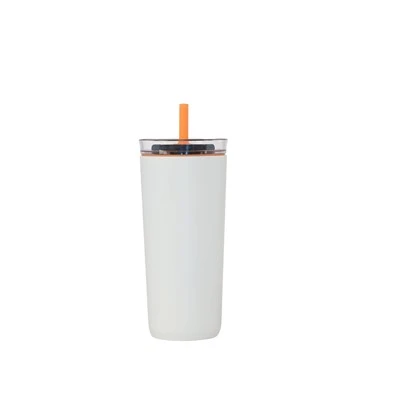
Stainless steel drinkware is evolving from a basic reusable container into a product category combining material performance, thermal insulation, portability, design, customization, and manufacturing flexibility. For importers, distributors, private-label brands, retailers, and foodservice buyers, understanding these product trends is important when selecting the right stainless steel cup or drinkware supplier.
In 2026, buyers are paying closer attention to stainless steel grade, wall construction, vacuum insulation, capacity, lid design, surface finish, customization, packaging, and production capability rather than simply comparing product prices.
This guide explains the key stainless steel drinkware trends and the product specifications buyers should evaluate before placing an OEM or wholesale order.

What Is Stainless Steel Drinkware?
Stainless steel drinkware refers to reusable beverage products manufactured primarily from stainless steel, including stainless steel cups, tumblers, travel mugs, water bottles, vacuum flasks, coffee mugs, and insulated drinkware.
Compared with disposable beverage containers, stainless steel products are designed for repeated use. Their product performance depends on several factors, including the stainless steel material, wall structure, forming process, welding, insulation construction, lid design, surface treatment, and final inspection.
For buyers, the term "stainless steel cup" alone does not define the complete product. Two cups with the same capacity may have significantly different performance because of differences in wall thickness, single- or double-wall construction, vacuum insulation, lid structure, and surface finishing.
2026 Stainless Steel Drinkware Trends
Several product trends are shaping stainless steel drinkware development in 2026.
Reusable Drinkware
Reusable products continue to be an important direction for beverage containers. Stainless steel cups and tumblers can be designed for repeated daily use and are suitable for applications including offices, commuting, travel, outdoor activities, cafes, and foodservice.
For manufacturers and brands, this creates demand for products that combine durability, portability, cleanability, and practical capacity.
Vacuum Insulated Drinkware
Vacuum insulation has become an important product configuration for tumblers, travel mugs, bottles, and thermal flasks.
A typical vacuum-insulated product uses an inner stainless steel wall, an outer wall, and an insulated space between them. This structure reduces heat transfer between the beverage and the surrounding environment.
Functional Lid Designs
The lid is increasingly treated as a functional component rather than simply an accessory.
Different applications may require:
Flip lids
Sliding lids
Screw lids
Straw lids
Drinking lids
Leak-resistant sealing structures
The lid structure affects drinking convenience, sealing, cleaning access, packaging dimensions, and overall product usability.
Customization and Private Label
For B2B buyers, customized drinkware is another important direction.
Brands may require customization of:
Product shape
Capacity
Color
Surface finish
Logo
Lid
Handle
Packaging
Accessories
This makes OEM/ODM manufacturing capability an important factor when selecting a stainless steel drinkware supplier.
304 Stainless Steel and Food-Contact Materials
Material selection is one of the first specifications buyers should confirm.
Stainless Steel Insulated Water Bottle, commonly associated with an 18/8 composition, is widely used in food-contact and drinkware applications because of its corrosion resistance and suitability for everyday beverage use.
However, buyers should not evaluate a product only by the term "304 stainless steel."
A complete specification should identify:
Stainless steel grade
Inner-wall material
Outer-wall material
Material thickness
Welding method
Surface treatment
Food-contact requirements
Applicable testing or compliance documentation
For private-label projects, these specifications should be confirmed before sampling so the final product matches the intended market and application.
Single-Wall vs. Double-Wall Stainless Steel Cups
The wall structure directly affects product weight, insulation, temperature transfer, and application.
Single-Wall Stainless Steel Cups
Single-wall cups use one stainless steel wall.
Their main characteristics include:
Lower product weight
Simple construction
Easy portability
Smaller overall structure
Suitable for everyday and outdoor applications
Because there is no separate insulation layer, the outer surface can become hot when the cup contains hot beverages and may develop condensation when used with cold drinks.
Single-wall construction can therefore be suitable when light weight and portability are more important than thermal insulation.
Double-Wall Stainless Steel Cups
Double-wall cups use inner and outer stainless steel walls with an intermediate space.
This structure helps reduce direct heat transfer between the beverage and the outside surface.
Compared with single-wall construction, double-wall drinkware can provide:
Better thermal insulation
Reduced external surface temperature
Improved handling of hot beverages
Reduced condensation with cold beverages
More suitable construction for travel and daily commuting
For buyers developing premium drinkware, double-wall construction can provide a different balance between product weight, insulation, durability, and cost.
Vacuum Insulated Stainless Steel Drinkware
Vacuum insulation is one of the most important technologies used in modern stainless steel drinkware.
A typical vacuum-insulated structure contains:
Inner Stainless Steel Wall → Vacuum Insulation Layer → Outer Stainless Steel Wall
The vacuum layer reduces heat transfer through the space between the two stainless steel walls.
This structure is commonly used in:
Vacuum tumblers
Travel mugs
Stainless steel bottles
Thermal flasks
Outdoor drinkware
When sourcing vacuum-insulated drinkware, buyers should evaluate more than the product's appearance.
Important specifications include:
Inner and outer wall material
Wall construction
Vacuum structure
Welding quality
Base construction
Lid sealing
Product dimensions
Capacity
Surface treatment
A manufacturer's ability to control forming, welding, vacuum processing, and inspection can directly affect production consistency.
Capacity and Application Selection
Capacity should be selected according to the intended application rather than simply choosing the largest available size.
Small Capacity
Small stainless steel cups can be suitable for:
Espresso
Short coffee servings
Tasting
Compact beverage applications
Medium Capacity
Medium-size drinkware is suitable for:
Coffee
Tea
Water
Office use
Commuting
Daily drinking
Large Capacity
Large stainless steel tumblers and bottles are commonly considered for:
Outdoor activities
Travel
Sports
Long working periods
High-volume hydration
Capacity also affects the overall dimensions, filled weight, packaging requirements, shipping volume, and user carrying experience.
For B2B buyers, capacity should therefore be evaluated together with product dimensions, weight, packaging, and target market.
Lid and Sealing Design
A stainless steel cup is not only a metal body. The lid can significantly influence the final product experience.
When developing a customized tumbler, buyers should specify the required lid structure before sampling.
Common options include:
Flip Lid
Designed for quick opening and closing, suitable for travel and commuting.
Sliding Lid
Provides a compact drinking opening and can be used on travel mugs and tumblers.
Straw Lid
Suitable for cold beverages, sports applications, outdoor use, and lifestyle drinkware.
Screw Lid
Provides a threaded connection between the lid and cup body and can be designed for portable applications.
Sealing Gasket
Silicone or other sealing components can be incorporated into the lid to support leak-resistant performance.
The lid should be developed together with the cup body because the lid diameter, opening, height, sealing structure, and connection method can affect the final product dimensions and packaging configuration.
Surface Finishes and Product Appearance
Surface treatment is another important area of stainless steel drinkware development.
Common finishes include:
Mirror finish
Brushed finish
Matte finish
Powder coating
Colored coating
Electroplating
Printed surfaces
Laser engraving
The inner and outer surfaces may also require different treatments.
For example, an inner surface can be polished to create a smoother contact surface, while the external surface can be customized according to brand positioning.
For private-label drinkware, surface customization can include:
Brand Color + Logo + Texture + Finish + Packaging
This allows manufacturers to transform a standard stainless steel cup into a product designed around a specific brand or market.
Portable and Functional Drinkware Designs
Portability is becoming an important consideration for travel and outdoor drinkware.
Product designs can include:
Handles
Folding handles
Carry loops
Compact bodies
Cup-holder-compatible dimensions
Wide-mouth openings
Lightweight construction
A fixed handle can provide a more stable grip, while a folding handle can reduce storage space.
Wide-mouth structures can also provide easier filling, cleaning, and addition of ice or beverages.
For buyers, the best configuration depends on the application rather than simply adding more functions to the product.
Custom Stainless Steel Drinkware and OEM/ODM
For importers and private-label brands, customization is increasingly connected to product development rather than simply logo printing.
A complete OEM/ODM project may include:
Product Concept
Define the intended application, target capacity, dimensions, material, and price structure.
Product Design
Develop the cup body, lid, handle, accessories, and appearance.
Prototype
Produce samples to verify dimensions, structure, appearance, and usability.
Mold Development
For products requiring dedicated tooling, the manufacturer evaluates mold construction before mass production.
Surface Customization
Possible processes include:
Laser engraving
Silk printing
UV printing
Embossing
3D printing
Powder coating
Electroplating
Packaging
Packaging can be customized according to brand requirements, retail channels, shipping conditions, and carton configuration.
For B2B buyers, an integrated OEM/ODM process can reduce coordination between multiple suppliers.
What Buyers Should Check Before Ordering
Before selecting a stainless steel drinkware supplier, buyers should prepare a clear product specification.
Material
Confirm:
Stainless steel grade
Inner-wall material
Outer-wall material
Material thickness
Construction
Confirm:
Single wall or double wall
Vacuum insulation or non-vacuum structure
Welding requirements
Base construction
Capacity
Confirm:
Nominal capacity
Actual capacity
Product dimensions
Product weight
Lid
Confirm:
Lid type
Opening method
Sealing structure
Straw requirements
Cleaning access
Surface
Confirm:
Finish
Color
Coating
Logo
Decoration method
Packaging
Confirm:
Individual packaging
Gift box or color box
Carton configuration
Accessories
Shipping requirements
Production
Confirm:
Sample development
Mold development
Production capacity
Quality inspection
Testing documentation
Lead time
OEM/ODM capability
A detailed specification makes the transition from quotation → sampling → approval → mass production more predictable.
Why Manufacturing Capability Matters
The final performance of stainless steel drinkware depends on how consistently the manufacturer controls each production stage.
A complete manufacturing process may involve:
Stainless Steel Forming → Welding → Vacuum Processing → Surface Treatment → Lid Production → Assembly → Logo Decoration → Inspection → Packaging
If these processes are distributed among too many suppliers, it can become more difficult to maintain consistent dimensions, appearance, material specifications, and delivery schedules.
For B2B buyers, an experienced manufacturer with integrated production capabilities can therefore provide advantages during product development and mass production.
Why Choose Hangzhou MACYS Houseware Co., Ltd.
Hangzhou MACYS Houseware Co., Ltd. is a China-based drinkware manufacturer established in 2013, specializing in stainless steel drinkware, vacuum flasks, coffee mugs, reusable bottles, and related houseware products.
For stainless steel drinkware projects, MACYS combines product development with manufacturing and customization capabilities.
Stainless Steel Manufacturing
The company has production equipment covering stainless steel tube forming and automated stainless steel processing, supporting the development of stainless steel bottles, tumblers, mugs, and related drinkware structures.
Integrated Production Capabilities
Its manufacturing capabilities cover multiple processes, including:
Stainless steel forming
Automated metal fabrication
Vacuum processing
Injection molding
Automated coating
Laser engraving
UV printing
This allows different product components and customization requirements to be coordinated within the same manufacturing system.
OEM and ODM Development
MACYS supports OEM/ODM projects from product concept and design through prototype, mold development, production, logo decoration, and packaging.
Its ODM process includes 3D product design, rendering and prototype development, mold drawing analysis, T1 testing, and multiple logo decoration methods.
Production Capacity
The company's manufacturing information lists 12 production lines and a stated daily capacity of up to 50,000 pieces, with quality control based on AQL standards.
This production structure is designed to support bulk orders as well as customized drinkware programs for international buyers.
Product Development for Different Markets
MACYS' stainless steel drinkware portfolio covers products such as:
Stainless Steel Vacuum Bottles
Stainless Steel Tumblers
Travel Mugs
Coffee Mugs
Thermal Mugs
Wide-Mouth Thermos
Large-Capacity Stainless Steel Cups
The company also provides customization according to product structure, capacity, lid configuration, appearance, logo, and packaging requirements.
Frequently Asked Questions
What is the most common stainless steel used for drinkware?
304 stainless steel is widely used in drinkware applications. Buyers should confirm the exact material grade, construction, and applicable food-contact requirements with the manufacturer.
What is the difference between single-wall and double-wall stainless steel cups?
Single-wall cups have one stainless steel wall and are generally lighter. Double-wall cups use inner and outer walls with an intermediate space to reduce heat transfer.
What is a vacuum insulated stainless steel cup?
A vacuum-insulated cup uses an inner wall, outer wall, and vacuum-insulated space between them to reduce heat transfer and improve temperature retention.
Can stainless steel drinkware be customized?
Yes. Depending on the manufacturer and product structure, customization can include capacity, shape, lid, color, surface finish, logo, accessories, and packaging.
What should I provide when requesting a stainless steel drinkware quotation?
A useful RFQ should include the desired material, capacity, dimensions, wall construction, insulation requirements, lid type, surface finish, logo, packaging, estimated quantity, and target market.
What should buyers look for in a stainless steel drinkware manufacturer?
Buyers should evaluate material control, forming and welding capability, vacuum processing, customization, quality inspection, production capacity, packaging, testing documentation, and OEM/ODM development support rather than comparing unit price alone.
Conclusion
The stainless steel drinkware market in 2026 is moving toward products that combine material selection, thermal performance, functional design, portability, customization, and manufacturing efficiency.
For buyers, choosing the right stainless steel cup is therefore not simply a question of capacity or appearance. The key is to define the complete product specification-from stainless steel grade and wall construction to vacuum insulation, lid structure, surface treatment, packaging, and quality requirements.
For brands, distributors, wholesalers, and private-label businesses developing customized drinkware, working with a manufacturer that can coordinate product development, stainless steel processing, vacuum production, surface customization, inspection, and OEM/ODM services can make the transition from concept to mass production more efficient.
Hangzhou MACYS Houseware Co., Ltd. provides these capabilities for international drinkware projects, supporting customized stainless steel bottles, tumblers, mugs, vacuum flasks, and related drinkware products from development through production.