Choosing the right Water Bottle capacity involves more than comparing different volume options. Capacity affects product dimensions, filled weight, carrying comfort, packaging, transportation, and intended application. For B2B projects, the specification should be determined according to the target market and usage conditions before moving into sampling and production.
1. Start With the Intended Use
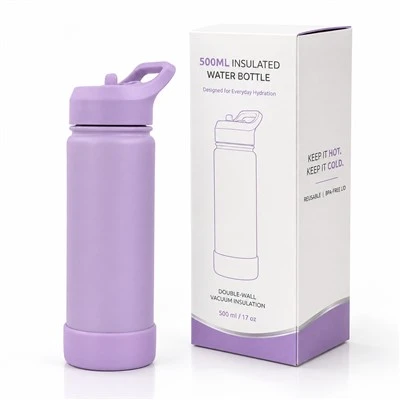
A 350–500 ml format can be considered for children, short trips, commuting, and situations where users have convenient access to refill points. Its compact dimensions also make it easier to place inside backpacks, handbags, and smaller storage spaces.
The 500–750 ml range provides a balance between portability and volume. This capacity can be considered for office use, commuting, school, and moderate exercise. At Hangzhou MACYS Houseware Co., Ltd., these applications can be developed across plastic, stainless steel, and glass constructions according to the required product specification.
For outdoor activities, travel, fitness, and longer working periods, 750 ml–1 L can reduce refill frequency. Larger capacities above 1 L can be considered when the product is intended for extended periods away from drinking-water sources.
2. Match Capacity With Product Dimensions
The capacity of a Water Bottle should be evaluated together with its physical structure. Increasing volume may require changes to height, diameter, shoulder shape, base, and lid dimensions.
These changes can affect compatibility with cup holders, backpacks, vehicle storage spaces, retail shelves, and shipping cartons. During OEM/ODM development, MACYS can evaluate capacity together with body dimensions and structural requirements rather than treating volume as an independent specification.
Material also needs to be considered. A double-wall stainless steel model requires additional space for insulation, so its external dimensions may be larger than those of a single-wall product with the same nominal capacity.
For this reason, capacity, material, body dimensions, and construction should be confirmed together during product development.
3. Consider Drinking Frequency and Refill Access
Capacity should reflect how frequently the user is expected to drink and how easily the product can be refilled.
Where drinking-water access is convenient, smaller formats can reduce product size while meeting the intended usage requirements. Office, school, and short-commute applications can therefore consider compact or medium capacities. MACYS supports different bottle categories, including kids, sports, travel, and daily-use designs, allowing capacity to be matched with specific applications.
For outdoor activities, travel, fitness sessions, or longer working periods, a larger capacity can reduce the number of refills required. A 750 ml to 1 L format may be suitable when users expect to remain away from refill points for longer periods.
The selection therefore involves a practical balance: a 500 ml model can be easier to carry, while a 750 ml or 1 L model can reduce refill frequency.
4. Evaluate Filled Weight
The filled weight should also be considered when selecting a Water Bottle. Approximately 500 ml of water adds 500 g to the finished product, while 1 L adds about 1 kg, before accounting for the bottle, lid, insulation, and accessories.
This difference matters for products carried for extended periods. Children's products and commuter models may require closer attention to overall weight, while outdoor products may accept additional weight in exchange for fewer refills.
For MACYS OEM/ODM projects, capacity can be evaluated alongside material and construction. A stainless steel insulated model, for example, can have a different total filled weight from a plastic model with the same nominal volume.
Capacity should therefore be assessed according to both liquid volume and the total weight of the finished product.
5. Consider Packaging and Logistics
A larger capacity generally requires more physical space per unit. This can affect carton dimensions, warehouse storage, pallet utilization, and transportation volume.
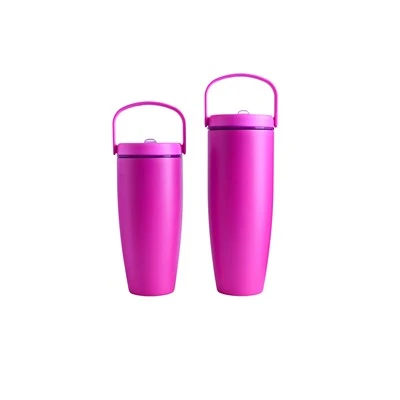
For projects involving large order quantities, the difference between a 750 ml and 1 L model can become relevant to the overall packing configuration. Although the two products may serve similar applications, their body dimensions can require different carton layouts and packing quantities.
When developing a private-label Water Bottle with MACYS, packaging can be considered together with capacity, body dimensions, logo requirements, and packing configuration. Confirming these specifications before production helps establish a clearer basis for quotation and shipment planning.
The final packing quantity should therefore be evaluated according to the actual product dimensions rather than capacity alone.
For OEM/ODM projects, capacity should be evaluated together with the complete product structure. Changing from 500 ml to 750 ml, for example, may require adjustments to bottle height, diameter, shoulder shape, lid size, insulation structure, packaging, and production processes.
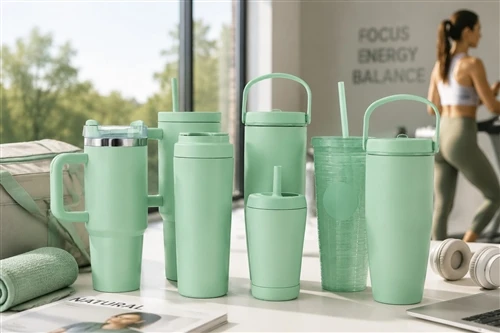
At Hangzhou MACYS Houseware Co., Ltd., capacity development can be coordinated with material selection, bottle structure, lid configuration, surface treatment, logo application, and packaging requirements. MACYS works with stainless steel, plastic, and glass constructions and supports insulated, sports, kids, travel, wide-mouth, straw, flip-lid, large-capacity, and custom designs.
Its manufacturing processes include stainless steel forming, metal fabrication, injection molding, vacuum processing, coating, laser engraving, and UV printing. These capabilities allow capacity, construction, appearance, branding, and production requirements to be considered within the same development process.
For B2B projects, defining these specifications together provides a clearer basis for sampling, quotation, packaging preparation, and mass production.

FAQ
1: What capacity should be selected for a new private-label project?
A 500–750 ml format can be considered for everyday applications, while 750 ml–1 L may be more suitable for fitness, outdoor, travel, or longer-duration use. The final specification should be based on the intended application, carrying requirements, product dimensions, and refill conditions.
2: Can MACYS develop a custom capacity?
Yes. MACYS can discuss capacity together with body dimensions, materials, lid structures, insulation, surface treatment, branding, and packaging requirements during OEM/ODM development.
3: Does changing the capacity affect packaging?
It can. A change in capacity may affect body dimensions, carton layouts, packing quantity, and transportation volume. These factors can be evaluated during the product development stage.
4: Should capacity be confirmed before the bottle design?
Yes. Defining the target capacity early provides a reference for determining body dimensions, structure, lid design, insulation requirements, packaging, and shipping configuration. This is particularly important for OEM/ODM projects involving multiple customized specifications.